If you’ve ever driven past a remote construction site, a wind farm stretching across rolling hills, or a wildlife preserve patrolled for poachers, you’ve likely glanced at a monitoring tower. As a supplier who’s installed hundreds of these structures over the past 12 years, I can tell you: building one is far more than just bolting steel poles together and hoisting a camera array on top. Every project comes with a stack of regulations—local, national, and industry-specific—that can derail timelines, blow budgets, or even halt work entirely if skipped. I’ve learned this the hard way, after a 2019 job in northern Alberta that almost got shut down mid-build because I missed a tiny provincial easement rule. Today, let’s break down exactly what applies, how to map it before breaking ground, and why partnering with someone who knows these rules (hint: that’s us, your go-to monitoring tower supplier) saves you from costly mistakes. Monitoring Tower
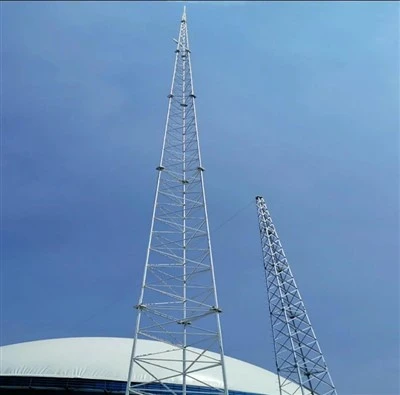
First, let’s start with the most immediate set of rules: local land use and zoning regulations. This is your first stop, no matter where you’re building. I once had a client in a small mountain town in Colorado who wanted a 60-foot monitoring tower for a ski resort’s avalanche patrol—until the town’s zoning department told him that structures over 40 feet needed a conditional use permit, which added three months of review and a $15,000 permitting fee. Zoning rules aren’t just “no buildings here”; they specify setbacks (how far your tower has to be from property lines, roads, wetlands, or historic sites), maximum height limits, and even what the tower can be used for. For rural sites (most of our projects are in rural or remote areas), you also need to check county-level zoning, which often applies to unincorporated land. Some places, like parts of Wyoming, have “industrial wind zone” rules that treat monitoring towers similar to energy infrastructure, requiring pre-construction meetings with county planning staff and even public hearings if the tower is over 100 feet. Skip this step, and you could be ordering that 60-foot galvanized steel tower and then finding out it can’t be erected where you planned.
Next, federal regulations—these are non-negotiable, and they vary a lot based on what your tower will monitor and where it stands. For towers taller than 200 feet above ground level, the Federal Aviation Administration (FAA) in the U.S. requires a notice of proposed construction (NPC) filing, and often the installation of FAA-approved aviation lighting on the top and sides. I’ve seen a 180-foot tower for a remote utility site get denied in 2021 because the company forgot to file for the NPC—they thought 180 feet was under the threshold, but it’s measured from the nearest ground level, not sea level, and the site’s elevation pushed it over the limit. If your tower is near an airport, even smaller structures might need aviation clearance; the FAA’s Airports District Office will review to make sure your tower doesn’t interfere with flight paths. For monitoring towers that use wireless sensors or cameras, the Federal Communications Commission (FCC) also has rules: if your tower hosts radio equipment for long-range data transmission, you need to register the equipment and ensure it meets frequency allocation standards to avoid interfering with local radio, cellular, or emergency services. Even if your tower is purely for visual monitoring (no wireless transmitters), some FCC rules apply to the physical structure if it’s part of a communication-related setup—better to confirm that upfront than to have equipment rejected mid-install.
Then there are environmental regulations, which are critical if your site is near protected ecosystems, water bodies, or endangered species habitats. For example, in the European Union, the Habitats Directive requires an environmental impact assessment (EIA) for any structure over 50 feet in certain protected areas, looking at how the tower could disrupt bird migration, bat flight paths, or plant life. In the U.S., the Environmental Protection Agency (EPA) and Army Corps of Engineers regulate work in wetlands and waterways: if your tower’s foundation will disturb more than 1,000 square feet of wetland, you need a Clean Water Act permit. I had a project in Oregon’s Willamette Valley a few years back where we tried to install a tower near a salmon spawning stream—we thought the foundation would be 10 feet from the bank, but the Army Corps said any structure within 50 feet of a salmon habitat required a separate endangered species consultation, which added two months of coordination with wildlife biologists. Even remote sites aren’t off the hook: if your tower is in an area designated as critical habitat for a protected species (like the greater sage-grouse in the Western U.S.), you might need to adjust the tower’s design—using less disruptive materials, smaller footprints—to get approval. Many of our clients don’t know about these rules until they’re ready to pour concrete, so we always include an environmental pre-assessment as part of our turnkey service.
Wait, what about electrical safety and structural codes? You can’t just use any steel pole for a monitoring tower—local building codes (often adopted from national standards like the International Building Code, IBC) set rules for wind load, seismic resistance, and foundation design. For example, in tornado-prone areas like Oklahoma, towers taller than 30 feet need to be engineered to withstand 110 mph winds, while in hurricane zones like Florida, the load jumps to 150 mph. A few years ago, a client in Texas tried to use a standard utility pole for a 40-foot monitoring tower; our engineering team pointed out that the pole wasn’t rated for the wind load in his area, so we had to swap it for a heavier-duty galvanized steel tower that fit code. Electrical safety is another piece: if your tower has any wiring for sensors or cameras, you need to follow National Electrical Code (NEC) standards for grounding to prevent lightning strikes—monitoring towers are frequent lightning targets, so proper grounding isn’t just a code requirement, it’s critical for protecting your equipment. We build every our towers with lightning protection systems that meet NEC standards, so you don’t have to worry about retests or failed inspections.
Let’s also talk about utility and utility easement rules. A lot of monitoring tower sites are near power lines, gas pipelines, or fiber optic cables, so you have to get written approval from the utility company before starting construction. Some utilities set minimum setbacks: for example, you can’t build a tower within 25 feet of a high-voltage power line, or within 10 feet of a gas pipeline. I once had a client in North Dakota who planned to put a tower for a crop monitoring network on his farm, right next to a natural gas pipeline that runs through the county. The pipeline company told us we had to adjust the tower’s location by 30 feet, which meant reworking the site layout and updating our permits—something we caught early because we always run utility locates before any site prep. Even if the utility isn’t public (like a private pipeline on land leased to a farmer), you still need to get the landowner’s permission and confirm that the tower won’t interfere with their operations. That’s another reason why our end-to-end site survey includes utility mapping—we cut out the guesswork.
Now, how do all these rules add up for a real-world project? Last year, we installed a 85-foot monitoring tower for a wildfire mitigation company in northern California. Here’s how we navigated the rules step by step: first, we checked with the county planning department, confirmed zoning allowed the tower, and got a conditional use permit. Next, we filed with the FAA—since the tower was 85 feet, way below the 200-foot threshold, but we still notified the local Airports District Office to make sure it didn’t interfere with nearby rural air strips. Then, environmental: the site was near a oak woodland habitat, so we did a pre-assessment to confirm the tower’s footprint was less than 500 square feet, avoiding any wetlands, and coordinated with the California Department of Fish and Wildlife to ensure it wouldn’t disrupt local woodpecker nesting. We also ran utility locates, found a fiber optic line 15 feet from the planned site, adjusted the tower’s location, and followed NEC grounding rules for the camera and sensor wiring. The whole process took 6 weeks, versus the 12 weeks the client had budgeted, because we knew exactly which rules to prioritize and how to coordinate permits efficiently.
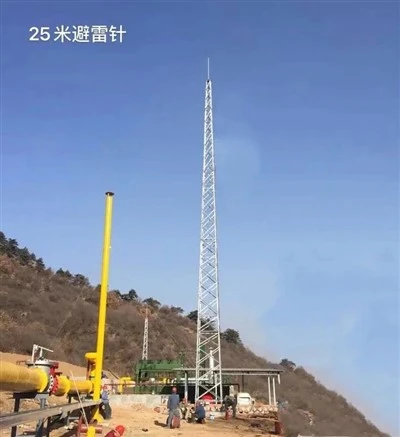
A lot of first-time monitoring tower clients make the mistake of only looking at the cost of the tower itself, not the hidden regulatory costs. Permits can range from $500 for a small, remote tower to $20,000+ for a tower in a protected area with an EIA. Delays from missed rules can cost thousands a day in lost productivity, especially for clients like wildfire mitigation teams or construction companies that need the tower up fast. That’s where our experience as a supplier comes in: we don’t just sell you a tower—we handle the regulatory legwork, coordinate with local and federal agencies, and make sure every part of your build meets the rules before we even ship materials. We’ve streamlined this process over 12 years and hundreds of installations, so we know which forms to file, which agencies to contact, and how to avoid common pitfalls that trip up first-time builders.
Power Transmission Tower If you’re planning a monitoring tower project—whether it’s for wildlife tracking, construction site safety, wind farm monitoring, or crop health—don’t let regulatory headaches derail your timeline. Every site is unique, and rules change by location, so it’s critical to work with a team that’s already navigated hundreds of these projects. We’ve got the engineering expertise, local connections, and regulatory knowledge to make your build smooth and compliant. If you’re ready to get started, reach out to our team to discuss your project, share your site details, and get a clear breakdown of what regulations apply to your specific location. No jargon, no hidden fees, just honest guidance to get your monitoring tower up and running on schedule.
References
- International Code Council. (2021). International Building Code.
- U.S. Federal Aviation Administration. (2022). Notice of Proposed Construction (NPC) Guidance for Antenna Towers and Communication Structures.
- U.S. Environmental Protection Agency. (2020). Clean Water Act Permitting for Wetland and Waterway Disturbance.
- National Fire Protection Association. (2021). National Electrical Code (NEC) Chapter 2: Wiring and Protection.
- European Commission. (1992). Council Directive 92/43/EEC on the Conservation of Natural Habitats and of Wild Fauna and Flora (Habitats Directive).
Hunan Zhubang Hongsheng Construction Technology Co., Ltd.
As one of the most professional monitoring tower manufacturers and suppliers in China, we’re featured by quality products and good price. Welcome to buy high-grade monitoring tower made in China here and get quotation from our factory. Customized orders are welcome.
Address: Lutang Village, Yong’an Town, Liuyang City, Changsha City, Hunan Province, Hunan Zhubang Hongsheng Construction Technology Co., Ltd.
E-mail: 19898838989@163.com
WebSite: https://www.chinaenerto.com/
