Hey everyone, thanks for swinging by my little corner of the internet! Today, I’m answering one of the most common questions I get from folks reaching out as a gear reduction motor supplier: “Can gear reduction motors be reversed?” It’s a question that comes up all the time—whether you’re building a conveyor for a warehouse, a small electric gate, or even a DIY robotics project—and if you’re not super deep into motor tech, it’s easy to get confused. Let’s break this down like we’re chatting over a coffee, no stuffy engineering jargon (well, maybe a little, but we’ll keep it simple). Gear Reduction Motor

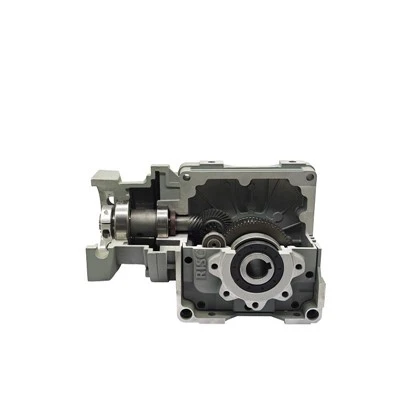
First, let’s start with the basics. What’s a gear reduction motor, anyway? If you’re new here, it’s just a regular electric motor paired with a gearbox that slows down the motor’s fast spin and cranks up the torque (that’s the twisting force that does work, by the way). Most regular electric motors spin super fast—like, thousands of RPM—but they don’t have a lot of oomph to move heavy things. The gearbox fixes that: take a 3000 RPM motor, add a 10:1 gear reduction, and now you’ve got 300 RPM with 10x the torque. Makes sense, right?
Now, back to the big question: can you reverse it? The short answer is… usually yes, but with a couple of caveats. Wait, let’s not get ahead of ourselves. Reversing a motor means flipping the direction it spins, which lets your gearbox output go forward and backward. For most gear reduction motors we supply, reversing is totally doable—like, no extra parts needed kind of doable. But why would someone even want to reverse it? Think about things like automated sliding gates that need to open and close, conveyor belts that move product left then right, or even a winch that lifts and lowers a load. If your motor only spins one way, those jobs get way harder.
But hold up—let’s talk about how you actually reverse a standard gear reduction motor. Most of our small AC and DC gear motors use what’s called a reversible motor design. For DC ones, it’s just about flipping the polarity of the power wires. Instead of positive going to terminal A and negative to B, you swap them: positive to B, negative to A. That’s it—boom, spin direction flips. For some AC gear motors, you might need to swap the run and start windings, but honestly, a lot of modern models are pre-wired to reverse easily without rewiring the internals. We test every motor we ship, so if it’s marked reversible, it’s ready to go.
Wait, but here’s the part that trips people up: not all gear reduction motors are created equal. Some specialized ones can’t be reversed without major tweaks—you can’t just flip a switch and go. Let’s break down the types of motors and their reverse abilities.
First, DC gear motors: 90% of the DC gear motors we stock are reversible. Why? Because DC motors run on direct current, so flipping polarity changes the magnetic field inside, which reverses the spin. The only DC ones that can’t be reversed are like, specialty brushed motors with built-in brakes that lock if power flips, or tiny micro motors for things like toy cars that are only designed to run one way—we don’t carry many of those, since most industrial or commercial uses need reverse.
Then AC gear motors: These are a little trickier, but still, most can be reversed. Single-phase AC motors (the ones you use for things like fans or small pumps) usually need a capacitor and wiring swap to reverse. Three-phase AC motors, though? Super easy—just swap any two of the three power lines, and the direction flips. That’s why three-phase gear motors are so popular for conveyor systems and machine tools, they’re rock solid for reversing all day long.
Now, what about the exceptions? Let’s talk about gear reduction motors that can’t be reversed easily. First, stepper gear motors. Steppers are for precise position control—they spin in small, step-like moves. A lot of stepper motors can be reversed, but you have to program the controller, not just flip power. If you’re using a stepper gear motor without a controller, reversing it is way harder. Then there’s worm drive gear motors. Wait, worm drives are those where a screw-like gear (the worm) meshes with a spur gear. Those are great for super high reduction ratios and self-locking—meaning the gear can’t spin the worm, only the worm spins the gear. But here’s the catch: a lot of worm drive gear motors can’t be reversed because the self-locking feature only works one way. If you try to reverse the motor, the gears might bind up, or the load won’t move because the worm can’t transmit torque in reverse. That’s an important one—if you’re using a worm drive for a gate that needs to close both ways, you have to make sure it’s a reversible worm drive, not a standard self-locking one.
We run into this a lot with customers who switch to a worm drive motor thinking it’ll work for their application, then get stuck when they can’t reverse it. Pro tip: if you need reverse with a worm drive, ask us for a “reversible worm gear motor” instead of the standard one. We make those with a slightly different gear setup so they can handle reverse without binding.
Another thing to think about when reversing a gear reduction motor: the load. If you’ve got a motor moving a heavy load, reversing it puts extra stress on the gears and the motor windings. Don’t slam the reverse switch without stopping first—let the motor come to a complete stop before flipping direction. If you do that, you’ll extend the life of the motor and gearbox a ton. We’ve seen customers who reverse mid-spin without a brake, and they end up with stripped gears or burnt-out windings. It’s not worth cutting corners.
Wait, let’s talk about real-world examples. Last month, a customer reached out to us who was building a custom automated greenhouse vent system. They needed the vent to open and close, so they needed a reversible gear motor. They originally bought a non-reversible motor from another supplier, spent a week wiring it, then realized they couldn’t flip the direction. They came to us, and we hooked them up with a 12V DC reversible gear motor that’s perfect for their vent. They swapped the wires, and it worked like a charm. That’s exactly why we’re big on labeling our motors clearly: each one says if it’s reversible, what kind of reverse wiring it needs, and even notes if it’s not recommended for heavy reverse loads.
Another case: a factory client who needed a conveyor that moved pallets back and forth. They initially used a standard three-phase gear motor, and it worked great for forward, but when they tried to reverse it, the controller they were using didn’t have a reverse function. We helped them swap the wiring to reverse the motor, and added a simple relay to control direction from a PLC. No extra motor needed, just a small wiring tweak. That’s the beauty of most gear reduction motors—reverse is usually simple, not a whole new product.
Now, let’s bust a common myth. Some people think reversing a gear reduction motor will mess up the gear ratio or torque. That’s not true for most standard motors. The gear ratio is based on the gear teeth and how they mesh, not the direction of spin. Torque is still there, same as when spinning forward. The only time it changes is if you’re using a specialized motor with a gear setup designed only for one direction, which we already talked about.
What about maintenance when reversing? You should still do regular checks—every 6 months, look at the gearbox oil (if it’s an oil-lubricated gearbox) to make sure it’s not dirty or low, and check for loose wiring on the motor terminals. Reversing adds a little more wear, so keeping up with maintenance will save you from downtime later.
Wait, let’s wrap this up with a quick recap to make sure it’s clear:
- Most gear reduction motors (DC, three-phase AC, single-phase AC) are reversible with simple wiring changes.
- Exceptions: stepper motors (need a controller), standard self-locking worm drive motors (can’t reverse without special design).
- Always let the motor stop completely before reversing to avoid damage.
- If you’re not sure if your motor is reversible, ask your supplier—don’t guess.
I can’t tell you how many times we’ve had customers come to us with a motor they bought elsewhere that they thought was reversible, only to find out it wasn’t. That’s why we make it easy: every product page has a clear “reversible” or “non-reversible” tag, and if you’re not sure, just shoot us a message. We’re not the kind of supplier who sells you something that doesn’t fit your needs—we’re here to help you get the right motor for your job.
If you’re working on a project that needs a reversible gear reduction motor, or if you have more questions about reverse functionality, feel free to reach out to our team to talk through your exact needs. We can help you pick the right motor, explain the wiring, and even give tips for setting up your reverse system. Don’t waste time on parts that don’t work—let’s make sure your project runs smooth from day one.
Parallel Shaft Gearboxes References
- Electric Motors and Drives: Fundamentals, Types and Applications, Hughes, A., Routledge, 2016.
- Gear Motor Technology: Selection and Application, Miller, J., Industrial Press, 2019.
- NEMA Standards for Reversible Electric Motors, National Electrical Manufacturers Association, 2021.
GuangDong Ruisico Transmission Technology Co., Ltd.
Guangdong Ruisico Transmission Technology Co., Ltd. is one of the most reliable gear reduction motor manufacturers and suppliers in China, also supports customized service. Welcome to buy durable gear reduction motor made in China here and get quotation from our factory. For price consultation, contact us.
Address: No. 70, Anjing Road, Shengfeng Community, Xiaolan Town, Zhongshan City
E-mail: info@risc-drive.com
WebSite: https://www.risc-motor.com/
