When I first started working as a corrugated transformer tank supplier ten years ago, I never thought I’d get asked this question so often: “Can corrugated transformer tanks be used in hazardous areas?” Back then, most of our work was with standard industrial transformers in safe environments, so hazardous locations felt like a whole different world—one with strict rules and even higher stakes. Over the years, though, I’ve spent countless hours collaborating with electrical engineers, safety inspectors, and even plant managers in oil refineries, chemical plants, and offshore platforms, and I’m here to tell you the answer isn’t a simple “yes” or “no.” It’s about understanding both what corrugated tanks bring to the table and the unique challenges of hazardous areas, then matching those two pieces together carefully. Corrugated Transformer Tank
First, let’s get clear on what a “hazardous area” actually means. For anyone not deep in the electrical safety space, these are places where flammable gases, vapors, or combustible dusts exist in quantities big enough to cause an explosion if they come into contact with a spark, high temperature, or arc. Think about a refinery where crude oil is processed, a chemical plant storing solvents, or a grain elevator with fine dust hanging in the air. The standards here aren’t just guidelines—they’re enforceable rules, mostly set by organizations like the National Electrical Manufacturers Association (NEMA) and the International Electrotechnical Commission (IEC). Hazardous areas are split into zones: Zone 0 (continuous presence of flammable materials), Zone 1 (likely to occur under normal operation), and Zone 2 (unlikely, and only for short periods). A transformer tank here has to do more than hold oil—it has to prevent any internal fault from igniting the surrounding atmosphere.
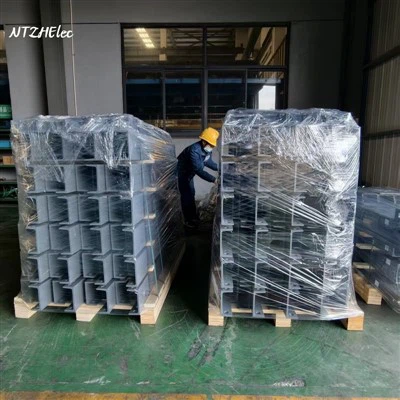
Now, what’s a corrugated transformer tank? Traditional transformer tanks are smooth, rigid shells that require a separate cooling system, usually a radiator or fan setup, to dissipate the heat generated by the transformer’s core and windings. Corrugated tanks, on the other hand, have patterned, folded sides that act as natural cooling fins. The corrugations increase the surface area exposed to air, so heat transfers out more efficiently without extra equipment. That makes them lighter, cheaper to manufacture, and easier to install than smooth tanks. But for hazardous areas, that “lighter, simpler” design brings both opportunities and risks.
Let’s start with why corrugated tanks make sense in hazardous locations, when done right. The biggest plus is their sealed design. Unlike some older transformer cooling systems that have external pipes or valves that could develop leaks, a corrugated tank is a single, welded unit (at least, for most standard designs we produce). If it’s properly built to avoid any openings that could let flammable gases inside, it meets a key requirement for hazardous area equipment: enclosure protection. Also, corrugated tanks don’t have the same number of potential weak points as smooth tanks with multiple radiators. Each radiator is a separate component that has its own gaskets, connections, and hoses—all places where a leak could happen. In a hazardous area, a small oil leak isn’t just a maintenance issue; it’s a fire risk. Corrugated tanks reduce that risk because they’re a more integrated structure.
Another benefit is weight. Offshore platforms, for example, have strict weight limits to keep platforms stable and reduce installation costs. A corrugated transformer tank can be 20-30% lighter than a smooth tank of the same capacity. That’s a big deal when you’re lifting a 5-ton transformer onto a platform—less weight means lower crane costs, less structural reinforcement needed for the platform deck, and less fuel used during transport. I’ve seen clients in the North Sea switch from smooth to corrugated tanks just for that reason, as long as the tanks were certified for hazardous areas.
But here’s where it gets tricky: not all corrugated tanks are safe for hazardous areas. The biggest challenge is meeting the explosion protection standards that govern these spaces. Most hazardous area transformers use one of a few protection methods: flameproof, increased safety, or oil-immersed with proper sealing. Flameproof enclosures are built to contain an internal explosion and prevent it from igniting the outside atmosphere. For corrugated tanks, that means the welds have to be uniform, no cracks or weak spots, and the corrugation design can’t create gaps where gases could seep through. A lot of off-the-shelf corrugated tanks aren’t designed with that in mind—their corrugations are made for standard cooling, not explosion resistance.
I remember a project a few years back where a client tried to use a standard corrugated tank in a Zone 1 chemical plant. The tank was fine for cooling, but when we tested it for explosion resistance, we found that the folded edges of the corrugations had small gaps (less than a millimeter, but enough) that would let an internal spark escape. We had to re-engineer the tank’s corners, add extra weld beads, and run a series of pressure tests to make sure it could withstand an internal blast without breaking. That’s the kind of customization that makes the difference between a tank that works and one that fails safety inspections.
Another factor is material selection. Corrugated tanks are usually made from carbon steel, but in some hazardous areas—especially those with corrosive gases like hydrogen sulfide (common in oil refineries)—standard carbon steel can rust, which weakens the tank over time. Rust creates holes, which not only leaks oil but also creates paths for flammable gases to enter. So for these environments, we use corrosion-resistant steel or apply a specialized coating that’s compatible with the hazardous atmosphere. I’ve had clients tell me they saved money in the long run by choosing a corrosion-resistant corrugated tank over a smooth one that would need constant maintenance to stop rust.
Heat management is another consideration. Corrugated tanks rely on air flow for cooling, but in some hazardous areas, air flow might be limited. For example, a transformer installed in a small utility vault at a refinery might have restricted ventilation, so the corrugated pattern could get too hot if it’s not designed for low air flow. We work with engineers to calculate the exact heat load of the transformer, adjust the corrugation depth and spacing, and even add small, explosion-proof fans if needed—so the tank cools properly without exceeding the maximum temperature allowed in hazardous areas (which is usually around 80°C for oil, to avoid igniting vapors).
Now, let’s talk about the certifications that matter most here. You can’t just build a corrugated tank and call it safe for hazardous areas. It needs to be certified by a recognized body, like UL in the U.S., ATEX in the EU, or IECEx internationally. These certifications test everything: pressure resistance, leak tightness, temperature limits, and explosion containment. We don’t ship any corrugated tank to a hazardous area without these certifications. Last year, we had a client in Singapore who almost bought an uncertified corrugated tank from a overseas supplier, but our team helped them understand that without ATEX certification, their plant wouldn’t pass its annual safety audit. That’s a mistake a lot of suppliers make—cutting corners on certification to keep costs low, but putting clients at huge risk.
I also want to address a common misconception: some people think corrugated tanks are too flexible for hazardous areas. But modern corrugated design uses high-strength steel, so the tank doesn’t flex enough to compromise its seal. In fact, the corrugations add structural rigidity in some ways—they distribute pressure more evenly than a smooth tank, which can sometimes develop dents if hit or under pressure. We’ve run load tests on our certified corrugated tanks, and they can withstand 1.5 times the normal internal pressure without any deformation. That’s more than enough for most hazardous area applications.
So when is a corrugated transformer tank the right choice for a hazardous area? Let’s outline the scenarios where we recommend them: first, where weight and installation costs are a concern—offshore platforms, rooftop installations, or retrofitting transformers in tight spaces. Second, where corrosion is a factor, and a corrugated tank’s sealed design reduces maintenance. Third, where the hazardous area is Zone 2 (lower risk) or even Zone 1, as long as the tank is properly certified and customized.
When is it not the right choice? If the hazardous area is Zone 0 (continuous presence of flammable gases), the standards for enclosure protection are much stricter. Most corrugated tanks, even our certified ones, aren’t designed for Zone 0 because that requires absolute gas-tightness, which is harder to achieve with a corrugated structure. Also, if the transformer has a very high power rating (over 10 MVA), corrugated tanks might not provide enough cooling, even with customization. For those, a smooth tank with specialized cooling is still better.
Over the years, I’ve learned that the key is communication. As a corrugated transformer tank supplier, we don’t just sell a product—we work with the client’s electrical engineers, safety teams, and plant managers to assess their specific hazardous area. We ask questions: What’s the zone classification? What gases or dust are present? What’s the transformer’s power rating? What’s the installation environment like? Every answer helps us tailor the corrugated tank to fit their needs.
I remember a recent project with a client in Houston, Texas, who has a chemical plant with Zone 1 areas. They needed a 2 MVA transformer for a new processing line, and they were worried about the cost of a smooth tank. We designed a corrugated tank with certified flameproof enclosures, corrosion-resistant steel, and optimized corrugations for the plant’s limited air flow. The client saved 18% on the tank cost compared to a smooth tank, and passed their safety audit on the first try. That’s the success I love to see.
At the end of the day, the question “Can corrugated transformer tanks be used in hazardous areas?” has a clear answer: yes, but only if they’re designed, certified, and customized for that specific environment. It’s not a one-size-fits-all solution, but when done right, corrugated tanks offer real benefits for clients in hazardous areas—lower cost, easier installation, and reduced maintenance.
If you’re working on a project in a hazardous area and want to explore whether a corrugated transformer tank is right for you, I’d be happy to discuss your needs in detail. We can walk through your site’s requirements, review certification options, and design a tank that meets both your performance and safety standards. Don’t hesitate to reach out to our team to start the conversation.
Electrical Enclosure References
- International Electrotechnical Commission (IEC). “IEC 60079: Explosive atmospheres.” Geneva, Switzerland, 2021.
- National Electrical Manufacturers Association (NEMA). “NEMA Standard 250: Enclosures for Electrical Equipment (1000 Volts and Less).” Rosslyn, VA, 2018.
- Underwriters Laboratories (UL). “UL 1203: Explosion-Proof and Dust-Ignition-Proof Electrical Equipment for Hazardous (Classified) Locations.” Northbrook, IL, 2020.
- European Committee for Electrotechnical Standardization (CENELEC). “EN 60079: Explosive atmospheres.” Brussels, Belgium, 2019.
- “Corrugated Transformer Tanks: Design and Performance Standards.” Journal of Electrical Power Equipment, Vol. 47, No. 2, 2022, pp. 112-118.
Nantong Zhihe Electric Co., Ltd.
As one of the most professional corrugated transformer tank manufacturers and suppliers in China, we’re featured by quality products and low price. Please rest assured to wholesale cheap corrugated transformer tank made in China here from our factory. Customized orders are welcome.
Address: NO.202 Jianghai West Road, Hai’an Town, Hai’an City, Jiangsu Province
E-mail: chiaragao123@gmail.com
WebSite: https://www.ntzhelectric.com/
