If you’ve ever stood in a factory, mine, or agricultural processing yard and watched goods glide along a conveyor line without spilling, rolling off, or shifting position mid-transport, chances are you were looking at a profiled conveyor belt. For years, I’ve been selling these belts to businesses that get stuck with standard flat belts: you know, the ones that let loose grains slide off the end, small parts roll under guards, or heavy materials shift so bad they jam the whole line. Let me break down what a profiled conveyor belt actually is, why it’s not just another belt with a weird edge, and how it’s been a game-changer for the customers I work with every day. Profiled Conveyor Belt
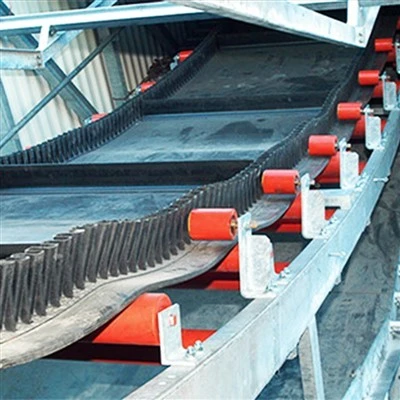
First, let’s cut the jargon. A profiled conveyor belt is basically a custom-shaped conveyor belt built with raised, structured edges, ridges, or patterns along its length and sides—way different from the flat, smooth belts you might see at a grocery store checkout or a simple assembly line. The “profile” is that custom shape, tailored to whatever you’re transporting. Unlike standard belts, which rely on gravity or plain friction to keep items on, a profiled belt uses its shape to lock materials in place, no fancy extra equipment needed. That’s why I’ve had guys in the grain mining and food processing industries hit me up saying this belt fixed a problem they’ve dealt with for years.
Let me give you a quick example. A few months back, a customer out in Iowa was hauling shelled corn across a sloped conveyor line, and every time they cranked the line up higher to move grain faster, half the corn rolled back down the belt. They tried cleated belting from another supplier, but the cleats were too low—corn still slipped between them. Then they switched to one of our profiled belts with a full-height side profile that runs the entire length of the conveyor, plus small cross-profiled ridges every 12 inches along the top. Now they run the belt at a 15-degree slope, way higher than they ever could with a flat belt, and no grain spills. That’s the thing about these belts: the profile isn’t just a design choice—it’s built for the load.
How are these belts even made, anyway? I’ve seen the whole process first-hand at the manufacturers I partner with, so I can tell you it’s not just a mold they pour once and call it a day. Most profiled conveyor belts are made from durable materials like rubber, PVC, or even food-grade plastic, depending on the use case. For heavy mining or construction, we use thick rubber with raised steel-reinforced profiles so they don’t tear under big rocks. For food processing, like moving fresh fruit or baked goods, we use smooth, non-toxic PVC with gentle profiles so they don’t scratch the products.
The profile patterns themselves can be totally customized, which is why they’re such a popular pick. Some profiles are low, wide ridges (called cleats, if you want the industry term) perfect for holding small, loose items like bolts or screws. Others are high, vertical side walls, which we call sidewall profiles, that form a sort of channel along the belt so you can move bulk materials like gravel or sugar without spilling. Even the top surface can be profiled: some have textured patterns to increase friction for slippery items like metal sheets, while others have smooth, rounded profiles for fragile things like glass jars so they don’t get scratched as they move.
Wait, let’s clear up a common mix-up people have: a profiled conveyor belt isn’t just a flat belt with some strips glued on the sides. That’s a cheap copy job, and I’ve seen those fall apart after a month. Our belts are made with the profile molded or vulcanized directly into the belt during production, so the profile is part of the belt, not an add-on. That means it can handle way more wear and tear, especially in heavy-duty settings. I once had a customer in a quarry who tried a glued-on sidewall belt for moving limestone, and it split after three weeks from the constant banging of big rocks. The profiled belt we sent him lasted two years before he even needed a repair.
Now, what are the main uses for these belts? I deal with customers across all kinds of industries, so I can rattle off a bunch of real examples. Agriculture is a big one: moving grain, seeds, feed, or hay pellets—all loose, slippery stuff that slides on flat belts. Then there’s food and beverage: moving apples, potatoes, baked goods, or even empty cans, all of which need to stay in place and not get damaged. Mining and construction: moving coal, gravel, sand, or even small construction parts that would roll off a flat belt. Electronics too: moving tiny circuit boards or small components that would shift and get damaged on a standard smooth belt. Even logistics: moving packages along a sloped conveyor in a warehouse, where flat belts often let boxes slide back.
Another thing people don’t realize: profiled conveyor belts can also help with efficiency, which is huge for any business. Let’s say you’re running a flat belt line and you have to slow it way down to keep materials from spilling or shifting. That means less product moving per hour, more labor to clean up spills, and even downtime when jammed items stop the whole line. With a profiled belt, you can run the belt faster, at a steeper slope, without all those problems. I had a customer who processes pet food: he was moving 10 tons of kibble per hour on a flat belt, and it spilled so much they lost 5% of their product every run. Since switching to our profiled sidewall belt, they’re moving 14 tons per hour, and spillage is down to less than 1%. That’s not just a small win—that’s extra profit they didn’t have before.
But wait, profiled belts aren’t one-size-fits-all. That’s why I always ask customers a bunch of questions before I even send a quote. First, what are you moving? Is it loose grain, fragile fruit, heavy rock, or small parts? That tells us what kind of material the belt should be made from and what profile shape works. Then, what’s the slope of your conveyor? A steeper slope needs taller profiles, while a flat line can get away with smaller cross-profiled ridges. Also, how heavy is your load? A 50-pound bag of concrete needs a way sturdier profile than a 1-ounce apple. Even how often the belt is used matters: a 24/7 mining line needs a way more durable profile than a warehouse line that only runs 8 hours a day.
I see a lot of guys online asking if a profiled belt is worth the extra cost compared to a flat belt. Yeah, upfront it’s a little more expensive, but let’s do the math. If your flat belt is spilling product, you’re wasting materials, spending extra time cleaning up, and dealing with downtime when the line jams. Our customers almost always tell us they make back the extra cost in a few months, sometimes even weeks, from reduced spillage, faster line speeds, and less repair work. And let’s not forget: a cheap, glued-on profile belt might break after a month, so you’re replacing it way more often, which ends up costing way more in the long run.
I should also mention that profiled belts aren’t just for moving materials from point A to point B. Some people use them for sorting too. The textured profiles on the belt mean different items slide at different speeds, so they separate as they move along. I had a customer who recycles plastic: they dump a mix of plastic bottles, jars, and small fragments onto the profiled belt, and the profiles make the different items move at different rates, so they sort themselves into separate bins without extra sorting machines. That’s another big efficiency win.
Now, if you’re reading this and thinking, “This sounds like exactly what my line is missing,” let me tell you how to make it work. First, don’t just order a random profiled belt off the internet. I’ve seen so many guys pick a belt that looks right, only to find the profile is too short, too low, or made from the wrong material for their load. The best thing to do is reach out with details: what you’re moving, the slope of your conveyor, how much you’re carrying, and how often you run the line. I’ll help you figure out the exact profile, material, and size you need. We even make custom profiles if none of our standard ones fit—last month, a customer needed a curved profiled belt for a small assembly line, and we molded it just how he wanted it.
Wait, one last thing I want to stress: quality matters. A lot of suppliers out there will sell you a cheap profiled belt, but as I said earlier, the difference between a molded-in profile and a glued-on one is night and day. The partners I work with use industrial-grade materials and molding processes that make the profiles part of the belt, so they don’t pull off or tear, even under heavy use. I stand by every belt I sell, because I’ve seen how well they work for customers over the years.
If you’re tired of dealing with spilled materials, slow line speeds, or constant downtime from shifting items on your flat conveyor line, a profiled conveyor belt is probably the fix you need. Don’t waste another month dealing with the same old problems—reach out to me so we can talk through your needs, get you a custom quote, and get your line running smoother than ever.
Sidewall Conveyor Belt References
- Conveyor Equipment Manufacturers Association. (2022). Profiled Conveyor Belts: Design and Application Guidelines.
- Rubber and Plastics Conveyor Belt Manufacturers Association. (2021). Custom Profiled Belts for Industrial and Agricultural Use Cases.
- Food and Drug Administration. (2020). Food-Grade Conveyor Belt Materials for Bulk Food Processing.
Alumina Technology (Qingdao) New Materials Co., Ltd.
As one of the most professional profiled conveyor belt manufacturers and suppliers in China, we also support customized service. With abundant experience, we warmly welcome you to buy profiled conveyor belt for sale here and get quotation from our factory. For price consultation, contact us.
Address: No.448, Jiangshan South Road, Huangdao District, Qingdao City, Shandong Province
E-mail: Gloria.zhang@contitech.cn
WebSite: https://www.altechconveyorbelt.com/
