Hey there! If you’re reading this, chances are you’ve run into a frustrating issue: your contactor is stuck open, and that’s throwing your whole operation off. I get it—we’re a contactor supplier, so this stuff hits close to home. Contactor problems aren’t just “annoyances”; they can halt production, mess up your equipment, and even lead to costly downtime. Let’s break down the most common reasons this happens, how to spot them, and what you can do to fix ‘em (plus, why you should hit us up when you need solutions). Contactor
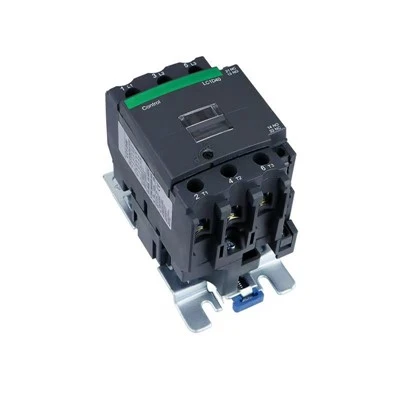
First, let’s keep this simple—what’s a contactor, anyway? For folks who might be new here, it’s basically a heavy-duty switch that controls motors, lighting, or other big electrical loads. It uses a small control signal to flip a mechanical switch, right? So if it’s stuck open, that means the switch won’t close, and your load isn’t getting power. Alright, let’s dive into the root causes.
1. Low (or No) Control Voltage
This is the most common culprit, hands down. Contactor coils run on a specific voltage—like 24V DC, 120V AC, whatever’s specified in your manual. If your control circuit isn’t delivering enough of that voltage, the coil can’t generate enough magnetic force to pull the contactor’s core closed.
Wait, how do you check this? Grab a multimeter. With the control circuit energized, touch the probes to the two coil terminals. If the reading is below 85% of the rated voltage, that’s your problem. Maybe a loose wire, a bad relay in the control circuit, or even a power supply that’s on its way out. I’ve seen this so many times—someone swaps out a part and forgets to tighten the control wire, or their PLC is sending a wimpy signal. Pro tip: Don’t guess at voltage—measure it. We deal with this daily, so trust me, it’s way easier than chasing a ghost.
2. Worn-Out Or Sticky Contacts
Contactor contacts are the metal bits that actually carry the load current. Over time, arcing (that spark when the switch flips) can wear ‘em down, or they can get corroded from dust, humidity, or oil in your environment. If the contacts are pitted, burned, or just covered in gunk, they might physically prevent the contactor from closing all the way—or stick in the open position.
Another thing: If your contactor is under-sized for the load, the contacts take way more heat, speeding up wear. I once had a customer who kept blowing contactors because they used a 10A contactor for a 15A motor—after a few weeks, the contacts welded a little? Wait no, wait—wait, if they’re stuck open, welding is the opposite (welding is stuck closed). Right, so worn contacts can get misaligned too. The moving contact arm might not line up with the stationary contacts, so even if the coil pulls, the contacts can’t make good connection, making it feel like it’s stuck open.
3. Damaged Coil Or Open Circuit In The Coil
The coil is what creates the magnetic field to close the contactor. If the coil is burned out, has a broken wire, or a loose connection inside, it won’t work at all. How do you test a coil? Use that same multimeter—set it to resistance (ohms). A good coil should have a specific resistance value (check your manual). If it’s infinity (no continuity), that means the coil is open—dead as a doornail. If it’s way lower than it should be, that could mean a shorted turn, which also kills the magnetic force.
We see this a lot with contactors that are exposed to extreme temps—like in a factory with hot machines, or outside in the sun. The coil insulation breaks down over time, leading to open circuits. Also, if someone accidentally connects the wrong voltage (like 240V AC to a 24V coil), that’ll fry the coil instantly. Oops—don’t let that happen.
4. Mechanical Obstructions In The Contactors
Contactors have moving parts: the armature, the springs, the contact arms. If something gets stuck in there—like a piece of metal shavings, dust, or even a loose screw from installation—the armature can’t pull all the way, so the contactor stays open. Or the return spring might be seized—those springs help pull the armature back when the coil de-energizes, but if they’re rusty or gummed up, they might not let the armature move forward to close.
Wait, I had a customer last year who installed a contactor in a woodworking shop. Sawdust got into the unit, packed around the armature, and it was stuck open. They didn’t clean it for 6 months—by then, the dust had hardened. We sent a tech out, they cleaned it, and it worked like new. Moral of the story: Check for physical gunk, especially if you’re in a dirty environment (construction, woodworking, mining, etc.).
5. Wrong Mounting Or Misalignment
If you install a contactor crookedly, or mount it on a surface that vibrates too much, that can throw the alignment off. The armature might not line up with the core, so even if the coil is working, the mechanical link won’t engage. Vibration is a big one—if your contactor is on a motor that shakes all day, the mounting bolts might loosen, leading to misalignment. I’ve seen contactors that were mounted on a panel next to a big pump; the vibration shifted the unit just enough that the contact arm couldn’t close.
How To Troubleshoot This Yourself (Quick Fixes)
Let’s say you’re staring at a stuck open contactor—here’s the step-by-step you can do before calling a pro (or us, obviously):
- Check power to the coil first: Measure voltage with the control circuit on. If it’s too low, fix the control wires or power supply. If it’s good, move on.
- Test the coil’s continuity: Use the multimeter to check for open circuit. If infinity, replace the coil (or the whole contactor—sometimes it’s easier).
- Inspect the contacts: If you can, pull the contactor apart (make sure power is off first!) and look for pitting, corrosion, or misalignment. Clean the contacts with a emery cloth (fine grit—don’t scratch ‘em too bad) if they’re gunked up.
- Check for obstructions: Blow out any dust or debris with compressed air (low pressure—you don’t want to damage parts). Wiggle the armature gently to see if it moves freely.
- Check mounting: Tighten the bolts, make sure it’s level, no vibration issues.
When To Swap Out The Contactor
Sometimes, a quick fix won’t cut it. If the contacts are badly burned, or the coil is shorted (not just open), or the mechanical parts are too worn, it’s time for a new one. And that’s where we come in—we’re not just a contactor supplier, we’ve got techs who know how to pick the right one for your load, your voltage, and your environment. No guesswork, no overpriced parts, just something that works for you.
Wait, a quick note: A lot of folks try to “jig” a stuck contactor—like tapping it with a wrench to get it to close. That might work temporarily, but it’s not a fix. Tapping can damage the contacts or the coil, leading to bigger problems later. Don’t do that.
Why You Should Work With Us For Your Contactor Needs
Look, we know that downtime costs you money. That’s why we don’t just sell contactors—we help you figure out what’s wrong, so you don’t have to stress about being stuck with the wrong part. Whether you need a replacement coil, a full contactor, or just advice on how to maintain yours, we’re here. We’ve been in the game long enough to know that every application is different—industrial, commercial, even heavy-duty stuff like mining or manufacturing.
If you’re tired of chasing contactor issues that never get fixed, or you’re tired of dealing with parts that wear out too fast, hit us up. We’ll walk you through what you need, no jargon, no pressure. Just solid parts and solid advice.
Wait, let’s wrap this up. The next time your contactor is stuck open, don’t panic. Start with the basics—voltage, coil, contacts, obstructions. But if none of that works, or you don’t want to mess with it, reach out. We’re here to help you get back up and running fast.
Molded Case Circuit Breakers Reference
- Electrical Contactor Troubleshooting Guide, National Electrical Manufacturers Association (NEMA)
- Contactor Maintenance and Failure Analysis, IEEE Industrial Electronics Society
- "Understanding Contactor Coil Ratings and Common Faults", Power Electronics Online Journal
Wenzhou Lanen Electrical Co., Ltd.
Wenzhou Lanen Electrical Co., Ltd. is one of the most professional contactor manufacturers and suppliers in China, also supports customized service with low price. Please feel free to buy CE approved contactor made in China here from our factory. Contact us for more discount information.
Address: Zhiguang Liushi Town Yueqing City Wenzhou City Zhejiang Province
E-mail: lanen@luyele.cn
WebSite: https://www.lanenelectrical.com/
