Can external circlips be used in a vacuum environment? That’s a question I get asked a lot as a supplier of external circlips. And it’s a good one, because the answer isn’t always straightforward. In this blog post, I’m going to share my thoughts and experiences on using external circlips in a vacuum, based on what I’ve learned from working with customers in various industries. External Circlips
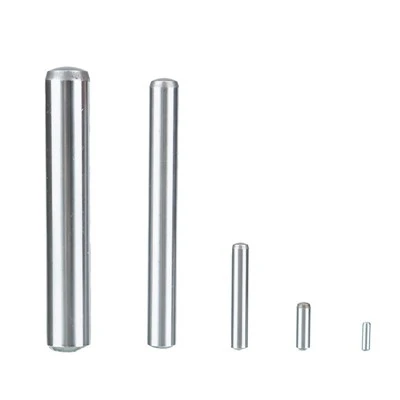
First off, let’s talk about what external circlips are. They’re those little metal rings that fit into grooves on the outside of a shaft or other cylindrical part. Their main job is to hold components in place axially, preventing them from sliding off or moving around. They’re used in all sorts of applications, from automotive engines to industrial machinery, and they’re super handy because they’re easy to install and remove.
Now, when it comes to using external circlips in a vacuum environment, there are a few things we’ve got to consider. One of the big issues is outgassing. In a vacuum, any gas or vapor that can escape from a material will do so. This is called outgassing, and it can be a real problem in a vacuum system. If a circlip outgasses, it can contaminate the vacuum chamber, which can mess up sensitive equipment or processes.
So, the first step is to choose the right material for the circlips. Some metals are better than others when it comes to outgassing. For example, stainless steel is a popular choice because it outgasses very little. It’s also corrosion-resistant, which is an added bonus. On the other hand, some types of carbon steel might outgas more, especially if they have a lot of surface contaminants or if they’ve been treated with certain chemicals.
Another thing to think about is how the circlips are made. The manufacturing process can have a big impact on outgassing. For instance, if the circlips are machined or polished, there might be some residual oils or lubricants on the surface. These can outgas in a vacuum. That’s why it’s important to make sure the circlips are thoroughly cleaned before they’re used in a vacuum application.
We’ve also got to consider the mechanical properties of the circlips in a vacuum. In a normal atmospheric environment, the pressure around the circlip is relatively equal on all sides. But in a vacuum, there’s no atmospheric pressure pushing on the outside of the circlip. This can affect how the circlip behaves, especially if it’s under stress.
For example, let’s say you’ve got a circlip holding a component in place on a rotating shaft. In a normal environment, the circlip will expand and contract slightly as the shaft rotates due to the centrifugal force. But in a vacuum, the lack of external pressure might cause the circlip to expand or contract more than it would in an atmospheric environment. This could potentially lead to the circlip loosening or even coming off, which would be a major problem.
To address this issue, we might need to choose circlips with a tighter fit or with specific design features that make them more stable in a vacuum. For example, some circlips are designed with extra grooves or ridges that help them grip the shaft more securely.
Thermal properties are another factor to keep in mind. In a vacuum, there’s no air to conduct heat, so components can heat up or cool down more quickly than they would in a normal environment. This can cause the materials in the circlip to expand or contract, which again can affect its performance.
If the temperature changes are significant, the circlip might lose its grip on the shaft or become too tight, leading to premature wear or even failure. So, we need to choose materials that have good thermal stability and that can handle the temperature variations expected in the vacuum environment.
In my experience, though, it’s definitely possible to use external circlips in a vacuum environment if you take the right precautions. I’ve worked with several customers who’ve successfully used our circlips in vacuum applications, like in semiconductor manufacturing equipment and space research projects.
In one case, a customer was developing a new type of vacuum chamber for testing electronic components. They needed circlips to hold some small parts in place inside the chamber. We recommended using our stainless steel circlips, which we’d specifically cleaned and tested to minimize outgassing. The customer also did their own tests on the circlips in a simulated vacuum environment to make sure they worked as expected. In the end, the project was a success, and the circlips performed well in the actual vacuum chamber.
So, to sum it up, yes, external circlips can be used in a vacuum environment, but you’ve got to be careful. Choose the right materials, make sure they’re properly cleaned, and consider the mechanical and thermal properties. If you do all that, you should be able to use external circlips in your vacuum application without any major issues.

If you’re in the market for external circlips for a vacuum or any other application, don’t hesitate to reach out and discuss your needs with me. I’ve got a wide range of circlips in different materials, sizes, and designs, and I’m happy to help you find the right ones for your project. Whether you’re working on a high – tech research project or a more common industrial application, I’m here to make sure you get the best circlips for your money.
Washers References:
- Metallurgy textbooks for information on material properties in vacuum
- Industry standards for vacuum chamber requirements and component suitability
- Case studies from previous customers using circlips in vacuum applications
Anhui Pins Metal Products Co., Ltd.
With abundant experience, we are one of the most professional external circlips manufacturers and suppliers in China. Please rest assured to buy high quality external circlips made in China here from our factory. For custom service and OEM&ODM service, contact us now.
Address: No. 381 Yangqiao Road, Quanjiao County, Chuzhou City, Anhui Province. Postal Code:239500
E-mail: info@chn-pins.com
WebSite: https://www.chn-pins.com/
