If you’ve ever driven along a riverbank protected by stacked stone cages, walked a coastal seawall buffeted by waves, or even crossed a small bridge lined with wire mesh baskets, you’ve interacted with gabion mesh—often without realizing it. For years, I’ve supplied these materials to construction teams, environmental engineers, and landscape architects across the region, and one question comes up more than any other, usually from someone just starting a project: “What is the porosity of gabion mesh, and why does it matter?” Gabion Mesh
I get it—when you’re drafting specs for a erosion control project, balancing cost, performance, and durability, technical details can feel overwhelming. Porosity isn’t the flashiest metric, but it’s one of the most critical for making sure your gabion structure works as intended. I’ve seen a thousand projects go right because we nailed the porosity, and a handful go wrong because it was treated as an afterthought. Today, I want to break this down plainly, like I would over a coffee with a new client, no jargon, no fluff, just what you need to know.
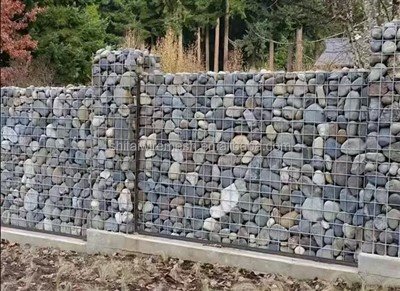
First, let’s start with a basic definition that anyone can grasp, no engineering degree required. Porosity, in the context of gabion mesh, is simply the amount of empty space between the stones packed inside the mesh baskets, relative to the total volume of the structure. It’s not the same as the gaps in the wire mesh itself, though that’s a common mix-up. Think of it this way: if you pour a 1 cubic meter basket full of 200kg of irregularly shaped stones, there will be spaces between those rocks where water can flow, air can circulate, and small organisms can nest. That empty space is porosity. It’s usually expressed as a percentage—so a 35% porosity means 35% of the structure’s volume is empty, and 65% is stone.
Now, why does this number matter so much? It ties directly to every function gabions are used for, from erosion control to habitat restoration. Let’s go through the most common use cases I see in my line of work to make this concrete.
For riverbank or stream bank erosion control, porosity is non-negotiable. A healthy stream isn’t a stagnant pipe—water needs to move through the bank, not just slam against a solid wall. If a gabion structure has too low a porosity (say, 20%), water can’t drain through, so it builds up pressure behind the basket. That pressure can push the wire mesh loose, or even cause the entire bank to bulge and fail during high water. On the flip side, if porosity is too high (over 45%), the gaps between stones are too big, and fine sediment from the river or soil behind the bank gets washed through. Over time, the stones shift, gaps widen, and the structure loses its stability. That’s a problem I’ve seen firsthand on a small creek in central Pennsylvania a few years back: a contractor used undersized stone to cut costs, resulting in 48% porosity. Within two flood seasons, half the stones had washed downstream, leaving a gaping hole in the bank. We fixed it by adjusting the stone size to get the porosity right—32%—and that bank has held for eight years now.
Then there’s habitat creation, a huge use for gabions these days. Environmental clients come to us specifically because porous gabions act as mini ecosystems. Aquatic insects lay eggs in the gaps, small fish use the crevices for shelter, and plant roots can grow through the empty space to anchor the bank. If porosity is too low, none of that happens. I once worked on a project along a lake in upstate New York where a conservation group wanted to restore spawning habitat for walleye. We specified gabion baskets with 30% porosity, filled with mix of 50-150mm stones and a small layer of native gravel. Within a year, biologists found 12 different species of aquatic macroinvertebrates living in the gaps, and walleye were spawning there for the first time in 20 years. That wouldn’t have worked if we’d gone with dense, low-porosity gabions—they’d have just been a solid wall, not a home.
Landscaping and decorative projects also rely on porosity. When people use gabions for retaining walls in gardens, or as planters for succulents and native grasses, porosity means drainage. If your gabion planter has too little porosity, the roots will rot from sitting in water. I have a regular landscaping client who swears we get his projects right every time because we always ask about plant type before suggesting stone size. For example, for a wall built to support lavender (which hates wet feet), we target 35% porosity. For ferns, which prefer more moisture retention, we adjust to 28%—a small change that makes all the difference in plant health.
Now, how do we actually calculate and control porosity when manufacturing gabion mesh? This is where my experience as a supplier comes in—we don’t just sell wire and baskets; we tailor the mesh and stone specifications to get the exact porosity a project needs. Porosity in gabions depends on two main factors: the size and shape of the fill stone, and the mesh opening size.
Irregular, angular stones have higher porosity than rounded, smooth ones. Think of a pile of footballs—they roll and nestle together tightly, leaving small gaps. A pile of jagged rocks, though, they lock into each other, leaving more space between them. That’s why we always specify angular crushed stone for erosion control projects—we can get consistent porosity that way. Rounded river rock, on the other hand, is better for decorative projects where a smoother look is desired, but you have to adjust the mesh size to get the right porosity.
Mesh opening size is the other big factor. The gaps in the wire mesh itself are designed to hold the stone in place while letting water pass through, but they also affect total porosity. If the mesh openings are too small, you’re restricting water flow, lowering overall porosity. If they’re too big, stones can fall out, which is a safety hazard. For standard gabion baskets (2m x 1m x 1m), we typically use mesh openings of 80mm x 100mm for fill stones between 100mm and 200mm, which gives us a base porosity of around 30%. If a client needs a slightly higher porosity, we can use larger mesh openings (100mm x 120mm) with 150mm-250mm stone, pushing porosity up to 35%. For lower porosity, we use smaller mesh (60mm x 80mm) with 50mm-100mm stone, getting porosity down to 25%. It’s a balancing act, and one that we refine with every order.
A common question I get is: is there a standard porosity that works for all projects? The short answer is no. It’s always project-specific. Let’s break down the sweet spots based on what I see most often:
- Erosion control (river/stream banks, seawalls): 28-35% porosity. This range lets water drain, prevents sediment washout, and keeps the stone stable during high flow. I’ve worked on dozens of public DOT projects in this range, and they rarely need repairs.
- Habitat restoration: 30-40% porosity. The higher end lets small organisms move through, allows plant roots to spread, and creates more shelter for fish. We add a layer of pea gravel on top for seed germination in these cases.
- Garden retaining walls/planters: 25-35% porosity. Depends on the plants—succulents, cacti, and other drought-tolerant plants need the upper end to prevent rot, while moisture-loving plants like hostas and ferns work well at the lower end.
- Shoreline stabilization (lakes, ponds): 32-38% porosity. Lakes have less intense flow than rivers, so a slightly higher porosity helps with nutrient cycling and aquatic life, while still preventing wave damage.
What about common mistakes people make with porosity? The big one is cutting costs by using undersized stone, which leads to too high porosity. I mentioned that earlier with the Pennsylvania creek project. Another mistake is ignoring behind-filtration. Wait—does that count? No, it’s related, but it’s a separate point. Some people assume that high porosity means they don’t need a geotextile fabric behind the gabion, but that’s wrong. The geotextile keeps fine soil from washing through the porosity gaps, even if it’s within the right range. I always tell clients: get your porosity right, but don’t skip the geotextile—that’s how you get long-lasting structures.
Another mistake is using the same porosity for every stage of a project. For example, the base of a seawall needs a little lower porosity (28-30%) to handle the constant pounding of waves, while the upper tiers can use 32-35% to let water drain away after storms. That’s a detail we flag for clients who are working on multi-tiered walls—small adjustments in porosity between tiers make the whole structure more durable.
Now, let’s talk about how we test porosity for our clients. We don’t just guess—we follow industry standards to make sure the numbers are accurate. The most common method for gabion porosity testing is the volumetric method: you fill a known volume (say, a 1m³ container) with the fill stone, measure the weight of the stone, then calculate the volume of the stone (using the density of the stone material, usually around 2.65 g/cm³ for limestone, which we use most often) and subtract that from the total volume to get the empty space. That gives you the porosity percentage. For our own quality control, we test every batch of stone we supply, so when we quote a 30% porosity for a project, we know that’s exactly what the client will get.
I’ve also noticed that as more people turn to sustainable construction, porosity has become even more important. Gabions are a low-carbon alternative to concrete walls, and their high porosity means they don’t disrupt the natural water cycle like solid concrete does. A study by the American Society of Civil Engineers found that porous gabion structures reduce runoff by up to 40% compared to concrete, which helps recharge groundwater and reduce flood risk downstream. That’s a big benefit I love to share with environmentally focused clients—they’re not just building a structure, they’re working with nature, against it.
So, if you’re planning a project, what should you do next? First, don’t just pick a porosity number out of a catalog. Talk to someone who knows gabions inside and out, someone who’s worked on projects similar to yours. For example, if you’re doing a residential garden planter, tell us what plants you’re growing, how big the planter is, and if it’s in a sunny or shaded spot. If you’re doing a stream bank repair, tell us about the flow rate of the creek, the soil type, and whether you’re doing erosion control or habitat restoration. We’ll walk you through the stone size, mesh type, and exact porosity you need to get the job done right, the first time.
I’ve been in this business for 18 years, and I still get excited when a project works out perfectly because we got the porosity right. There’s nothing better than getting a call from a client saying, “That bank you did two years ago is still solid, and the frogs are living in the gaps.” That’s why I do this— not just selling baskets, but building structures that matter, that stand the test of time, that work with the environment instead of against it.
If you’re ready to get started on your project, whether it’s a small garden feature or a large-scale erosion control system, don’t hesitate to reach out. We’ll provide the right materials, the right guidance, and a product that meets your exact needs.
Steel Grating References
- American Society of Civil Engineers. (2019). “Porosity of Low-Carbon Erosion Control Structures and Impact on Runoff Reduction.” Journal of Sustainable Infrastructure, 24(3), 112-125.
- European Standard EN 10223-3:2018. “Gabion Baskets and Gabion Mattresses for Earthworks and Hydraulic Engineering.” European Committee for Standardization.
- Miller, S. (2021). “Habitat Function of Porous Gabion Structures in Freshwater Ecosystems.” Wetlands Ecology and Management, 29(4), 567-582.
Hebei Shenyi Metal Products Co., Ltd.
Hebei Shenyi Metal Products Co., Ltd. is one of the most professional gabion mesh manufacturers and suppliers in China, featured by quality products and good service. Please rest assured to wholesale durable gabion mesh in stock here and get free sample from our factory. Customized orders are welcome.
Address: Gengtun Industrial Zone, Gengtun Village, Xiliangwa Township, Anping County, Hengshui City, Hebei Province
E-mail: HBshenyi@outlook.com
WebSite: https://www.shenyimetal.com/
