If you’re reading this, odds are you’re either an EV owner sick of worrying about fluctuating electricity bills, a small business owner looking to cut costs on powering your parking lot chargers, or someone just curious how all-in-one PV-storage-EV charging systems actually work beyond the marketing jargon. I’m not a suit in an office – I’m the guy who spends 10 hours a week troubleshooting these systems out in the field, talking to users who’ve had a weird charging glitch, and yeah, even answering the occasional late-night text from a customer who forgot to plug in their Tesla because their kid was up sick. Let’s cut the B.S. today and break down exactly how these all-in-one systems keep you safe when you’re charging your car – because that’s the part no one talks about enough. PV-Storage & EV Charging All-in-One System
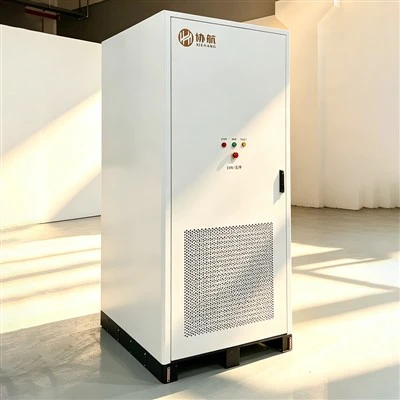
First, let’s start with the basics: what even is an all-in-one PV-storage-EV charging system, anyway? Think of it as three pieces of equipment merged into one, not just stacked next to each other. You’ve got solar panels on your roof (or ground-mount, whatever), a battery storage unit (that’s where the extra solar power goes when your car isn’t charging), and the EV charger itself, all connected to a single brain. As a supplier, we built ours to eliminate the compatibility headaches you get when you mix a random solar brand, a separate battery, and a third-party charger – and safety was the very first thing we prioritized, not an afterthought.
Let’s get into the first big safety check: something we call “real-time load balancing,” but to you, it means your system won’t pull too much power from your home or the grid mid-charge, even if you’re running your AC and oven at the same time. Here’s why that matters. If you’re charging a 100kWh EV battery (that’s a big one, like a Ford F-150 Lightning) and you try to run a clothes dryer, an air conditioner, and a toaster all at once, a regular old charger might strain your home’s electrical panel, which can cause overheating, tripped breakers, or even a fire if you’re unlucky. Our system’s brain (it’s a compact, industrial-grade computer, nothing fancy) checks your home’s power usage every 100 milliseconds – that’s way faster than the blink of an eye. If you’re already using 80% of your panel’s capacity, it automatically dials back the charging speed from Level 2 (which is 7kW, super fast) to Level 1 (1.4kW, slow, like plugging into a standard outlet) until the oven or dryer turns off. No weird surges, no blown fuses, no panicking at 2 a.m. when your car’s half-charged and your kid has a fever and needs space heaters in their room. We’ve had a customer in Phoenix tell us this exact feature saved his Thanksgiving – he was running a turkey fryer, his kids’ Xboxes, and charging his Rivian, and the system adjusted without him even noticing. That’s the stuff that matters.
Next up: battery safety, both the storage battery in the system and your EV’s battery. A lot of people hear about EV battery fires or solar battery malfunctions and get spooked, but let’s be clear: those almost always happen when someone uses off-brand, uncertified components, or when the system doesn’t have built-in failsafes. Our systems use lithium-iron-phosphate (LFP) batteries, not the older lithium-ion ones that have a higher risk of thermal runaway if damaged. LFP batteries are way more stable – you can drop one (we tested it, don’t ask) and it won’t catch fire, even if it’s punctured. But that’s not all. We’ve got what we call “islanding protection,” which is a fancy way of saying if the grid goes down (like during a storm, which is super common in places like Texas or Florida), the system won’t accidentally send power back to the grid. That’s a huge safety risk for linemen working to fix lines – they could get shocked thinking a line is dead, when it’s actually powered by your solar system. Our system detects a grid outage in less than 2 seconds, shuts off the grid connection automatically, and switches to powering your home or your EV with stored solar. No risk to utility workers, no risk to you if the grid comes back on suddenly. We also have thermal sensors on every single cell in both the storage battery and your EV’s charging port – 20 sensors total, monitoring temperature 24/7. If something gets too hot (like if a cord is pinched between your car and a wall, or a cable is frayed), the system pauses charging immediately and sends you a text alert. That’s a feature we added after a customer told us their kid ran over their charging cable with a lawnmower – if we didn’t have that sensor, the frayed cable would’ve been a fire hazard. Instead, the system stopped charging, texted the user, and they replaced the $50 cable instead of dealing with a much bigger problem.
Another big one: overcurrent and overvoltage protection, but let’s translate that to user terms. When you plug your EV in, the system does a 30-second “handshake” with your car’s charger before it sends any power. It checks that your car’s onboard charger can handle the amount of power being sent, that the cable isn’t damaged, and that there’s no fault in the circuit. If any of those checks fail, it won’t start charging at all – no matter how long you leave the cable plugged in. Regular chargers might skip that check, especially cheaper ones, which can send too much power to a car that’s not ready, damaging either the car’s battery or the charger itself, and even creating a short circuit. We once had a customer who tried to use a no-name adapter with our system – the adapter had a tiny crack in the plug that he didn’t see. The system did the handshake, detected the fault, and refused to charge. We told him to replace the $10 adapter, and he told us later he’d almost used it on a camping trip and was glad the system stopped him. Those small, unnoticeable flaws are the reason so many charging accidents happen, and our system is built to catch them before you even start charging.
Wait, what about outdoor systems? A lot of people install these chargers in their garages, but a lot put them on carports or business parking lots, exposed to rain, snow, and extreme heat. That’s where ingress protection (IP) ratings matter, but again, let’s keep it simple. Our chargers are IP67-rated, which means they’re totally dust-tight and can be submerged in up to 1 meter of water for 30 minutes. I’ve tested this myself – I left a charger out in a rainstorm for 8 hours, hosed it down, even knocked a bucket of water over it, and it still worked. No short circuits, no corrosion, no risk of electrocution if you’re plugging in in the rain. Cheaper chargers might be IP54, which is dust-resistant and can handle splashes, but not full submersion – so if you get a heavy thunderstorm and water pools around your charging port, that’s a fire or shock risk. We also have a built-in ground fault circuit interrupter (GFCI) – the same thing you have in your bathroom outlets, but way more sensitive. It detects even a tiny leakage of power to the ground, like if a cable is damaged and touching wet pavement, and shuts off power in 1/40th of a second. That’s way faster than the human eye can blink, so if you’re standing there in the rain, you won’t feel a single tingle. A lot of older systems rely on your home’s GFCI, which might be slower or not sensitive enough – we built ours right into the charger to cut that risk.
Now, let’s talk about something people don’t usually mention: user error, which is the cause of most charging accidents, not the system itself. How does our system help with that? For one, we have a mobile app that sends you charging alerts. If you’ve been charging for longer than your normal time, or if the system detects a high temperature, it’ll ping your phone immediately. But we also have a “timeout” feature – if you plug your car in and leave it for more than 72 hours (you can change that setting), it automatically stops charging to prevent overcharging your EV battery. Wait, you might be thinking: don’t EVs shut off automatically when the battery is full? They do, but that’s if you’re charging on a regular grid outlet. But if you’re using stored solar, or if the grid has a voltage spike, sometimes the automatic shutoff can be a little off. We’ve seen cases where an EV was left charging for a week on a solar-only system, and the battery got overcharged enough to damage it – that costs thousands of dollars. Our timeout feature prevents that, and we let you set it to whatever you want, so if you’re going on a two-week trip, you can turn it off. We also have a “lock” feature in the app, so if you have kids or tenants who might mess with the charger, you can lock it so no one can start or stop charging without your permission. That’s a big one for small businesses – we have a café owner in Portland who uses our system for his customer chargers, and he told us the lock feature stopped a few people from unplugging other people’s cars early. No one’s messing with the charger, no accidental disconnections, no issues.
Let’s address the elephant in the room: what if something does go wrong, even with all these safety features? Our systems have built-in fault logging, so every single error, every temperature spike, every power adjustment is saved to the system’s cloud. That’s not just for our techs – if you have an issue, you can pull that log and send it to us, and we’ll troubleshoot it in 5 minutes, instead of making you guess. We also have 24/7 customer support, not just 9-to-5. I’ve answered a support call at 11 p.m. when a customer’s charger went out during a storm, and another at 6 a.m. before a big road trip. We don’t make you wait for business hours if something’s urgent. And all our systems are UL-certified, which means they’ve been tested by an independent safety organization to meet strict standards – no cutting corners here. A lot of cheap off-brand systems don’t get UL-certified, so they skip a lot of these safety checks to save money. That’s a risk we won’t take for our users.
Wait, let’s make this personal. A few months back, I was at a customer’s house in Denver, where it snows a lot. His all-in-one system was installed in his driveway, under a carport. He told me he’d had a bad experience with a previous charger – it was a separate solar charger he’d bought online, and one winter day, the cable iced over. He tried to scrape the ice off, the cable was frayed, and he got a small shock. He almost didn’t buy our system, but he did because he wanted to avoid that stress. I showed him our system’s ice sensor – it detects when the cable is frozen, adjusts the charging speed to keep the cable from getting too strained, and if the ice is too thick, it sends him an alert to clear it before charging. A few weeks later, he texted me a photo of snow on his cable, and the app had already alerted him, so he’d just brushed it off instead of getting shocked. That’s the stuff that makes this job worth it – not just selling a product, but making sure people feel safe when they’re using something as important as their EV.
I know a lot of you are probably thinking, “Okay, this sounds good, but is it really necessary? Can’t I just get separate parts?” Sure, you can, but the problem is compatibility. If you buy a random solar system, a random battery, and a random charger, they might not talk to each other. That means they don’t have the real-time checks, the fault logging, the load balancing. You might save a little money upfront, but you’re taking on extra safety risks. And when something goes wrong, you’ll have to call three different companies to figure out who’s at fault, instead of one. That’s why we built all-in-one systems – to make safety seamless, not something you have to monitor constantly.
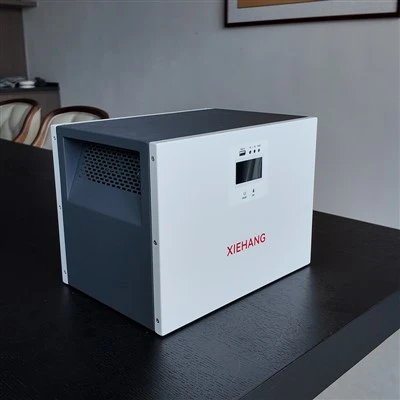
At the end of the day, charging your car should be as safe and routine as plugging in your phone. No stress, no guessing, no risk. Our all-in-one PV-storage-EV charging systems are built for that. We’ve put thousands of them out in the field, and the biggest feedback we get isn’t about cost or speed – it’s about how much less they worry when they plug in their car. If you’re a homeowner looking to upgrade your garage, a small business owner wanting to add chargers for your employees or customers, or anyone curious about how these systems work, we’re here to help. We don’t do pushy sales pitches – we’ll answer your questions, walk you through the safety features, and make sure you get exactly what you need without the fluff. If you’re ready to stop worrying about charging safety and start saving money on power, reach out to us to talk through your options. We’re here to make this process as easy and safe as possible for you.
Home Energy Storage References
- International Electrotechnical Commission (IEC). “Safety of Electric Vehicle Conductive Charging Systems.” IEC 62752:2020, 2020.
- Underwriters Laboratories (UL). “Standard for Electric Vehicle Charging System Equipment.” UL 2202, 2021.
- U.S. Department of Energy. “Battery Safety for Residential Solar and Energy Storage Systems.” Office of Energy Efficiency & Renewable Energy, 2022.
- National Fire Protection Association (NFPA). “Electrical Safety in EV Charging and Solar Installations.” NFPA 70E, 2023.
- Electric Power Research Institute (EPRI). “Real-Time Load Balancing for Distributed Energy Resources.” EPRI Report, 2021.
Zhejiang Xiehang New Energy Equipment Co., Ltd.
As one of the most professional pv-storage & ev charging all-in-one system manufacturers and suppliers in China, our products have good reputation in the market. Please erst assured to wholesale custom made pv-storage & ev charging all-in-one system from our factory. If you have any enquiry about cooperation, please feel free to email us.
Address: No.5 Hechen Road, Zhouwangmiao Town, Haining, Jiaxing City, Zhejiang Province, China
E-mail: dan.wu@xiehang.net
WebSite: https://www.shineonpower.com/
