If you’ve ever stepped onto a pickleball court, you know the sport’s biggest misconception: it’s not just a casual back-and-forth of soft shots and friendly rallies. The best players—whether weekend warriors or competitive circuit athletes—don’t just master offensive drives or volleys; they build their success on rock-solid defense. As a pickleball supplier, I’ve watched countless new players show up with flashy new paddles and zero clue how to hold their own when their opponent blasts a 25-mph shot straight at their feet. Over years of selling gear to players across skill levels, I’ve learned that great defense isn’t about being fast—it’s about understanding the court, adapting your mindset, and using the right tools to stay in the point. Pickleball
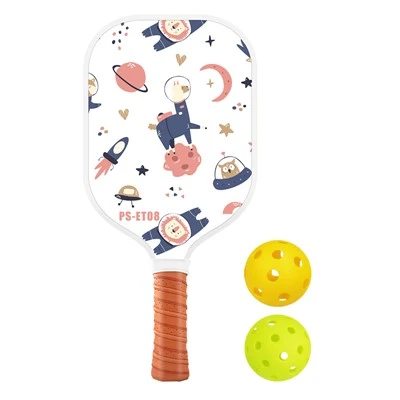
First, let’s cut through the noise: defensive play in pickleball doesn’t mean cowering at the back of the court waiting for mistakes. It’s a proactive, controlled style that forces your opponent to overcommit, rush their shots, or make errors when they thought they had a winner. Many players make the mistake of treating defense like a last resort—something to only do when they can’t hit an offensive shot. That’s backwards. Strong defense creates offensive opportunities: a well-placed block can redirect a hard drive wide, pulling your opponent out of position, and set you up for a winning tap at the net.
So how do you build that defense? Let’s start with the basics of court positioning, because even the best paddle won’t fix a messy setup. The key here is the “split step”—a small, explosive jump you do just as your opponent makes contact with the ball. It might feel silly at first, but it’s the foundation of quick reflexes. When your opponent is about to hit the ball, your weight should be on the balls of your feet, knees bent, ready to move left, right, forward, or back. A lot of players stand flat-footed at the baseline when defending, which means they have to work twice as hard to react to a shot. I tell every new player I work with at the shop: if you’re not taking split steps, you’re giving your opponent a free pass to hit anywhere they want.
Next, court positioning shifts depending on where the ball is. If you’re defending at the non-volley zone (NVZ, or “the kitchen” as most players call it) line—usually the first line of defense—you shouldn’t be standing right on the line itself. Staying 12 to 18 inches behind the NVZ line gives you room to react to high, overhead smashes without stepping into the kitchen, which is a fault that ends the point instantly. If you’re stuck at the baseline defending against deep drives, don’t stay all the way at the back corner. Move 2 to 3 feet toward the center of the court. Pickleball courts are narrow—moving toward the middle cuts down the angle your opponent can hit, making it harder for them to place shots wide past you. I’ve seen so many players get pulled off the court by wide shots because they stuck to the sideline instead of covering the center. It’s a small adjustment, but it changes how much ground you have to cover.
Now, let’s talk about shots themselves. The most common defensive shot is the block or reset, but too many players try to hit a hard defensive shot—thinking if they don’t, they’ll lose the point. That’s a costly mistake. A defensive block should be soft, controlled, and low. The goal isn’t to hit a winner; it’s to keep the ball in play, force your opponent to hit an overhead or a high shot, and push them back toward their own baseline. When an opponent hits a hard drive at you (especially a body shot, which is one of the most effective offensive tools because it’s hard to redirect), resist the urge to swing hard. Instead, keep your paddle face open, angle it slightly upward, and let the ball’s pace do the work. If you swing, you’re likely to send it out of bounds or into the net. I recommend players use a medium-weight paddle for this—too light, and it won’t absorb the momentum of a hard shot; too heavy, and it slows down your reaction time. That’s why most of our best-selling defensive paddles for intermediate players balance weight and control, perfect for those reset shots.
Another critical defensive shot is the dink, but not the soft dink you use at the net to set up points. A defensive dink is a “lob dink” or a high, floating shot that drops just over your opponent’s paddle, forcing them to move back. I see so many players panic when they’re at the NVZ and can’t hit an offensive shot, so they try to blast a groundstroke from the kitchen line. That’s a fault, and it’s a terrible way to give up points. Instead, use a defensive dink: keep your wrist loose, hit the ball with a soft, upward motion, and aim to land it 2 to 3 feet from your opponent’s baseline. This forces them to move off the NVZ, taking away their own offensive position, and gives you time to reset your own. It’s a simple shot, but it’s a game-changer for players struggling to hold their own at the net.
Now, let’s talk about mindset, because defense is as much mental as it is physical. A lot of players get frustrated when they’re defending—they think, “I’m on the back foot, I’m losing the point.” That attitude makes you rush your shots, which leads to errors. Great defenders see themselves as in control, even when they’re not hitting the winners. They’re patient. They wait for their opponent to make a mistake. I worked with a 14-year-old player last year who came into the shop wanting a “power paddle” to hit smashes. After watching him play, I pointed out that his defense was already strong, but he was abandoning it too soon. We traded his power paddle for a control-focused paddle, and by the end of the season, he was the top defensive player on his team. He told me he stopped chasing every shot and started letting his opponent make mistakes—and his win rate went up 40%. That’s the power of a defensive mindset.
Another common mental trap is fear of the overhead. When an opponent gets to the NVZ and hits a high overhead, it’s easy to freeze. But a good defensive strategy against an overhead isn’t to try to hit a winner—it’s to redirect it away from their position. Stand sideways to the net, keep your paddle face closed, and angle it toward the side opposite their position. For example, if your opponent is standing on the right side of the NVZ, aim your paddle at the left sideline. This sends the overhead wide, and since they’re out of position, they can’t cover it. A lot of players try to block the overhead straight at the opponent, which almost always ends in a winner for them. Redirecting, not attacking, is the key here.
Now, let’s talk about the tools that make great defense possible—and why as a pickleball supplier, we focus on making gear that supports defense as much as offense. A lot of suppliers market paddles for power, but defensive play needs control, stability, and weight. Light paddles (under 7.5 ounces) are great for offensive players who want fast volleys, but they lack the stability to absorb hard shots at the baseline. Medium-weight paddles (7.5 to 8.5 ounces) are the sweet spot for defense: they’re heavy enough to control pace, light enough to move quickly for side-to-side shots. Paddle face texture matters too: a smooth face is better for defensive blocks, because it reduces spin, while a textured face is for adding spin on offensive shots. I recommend players new to defense start with a medium-smooth face paddle—it’s forgiving for reset shots and absorbs momentum well.
Gear isn’t just paddles, either. Footwear is a huge part of defensive play. A lot of new players wear running shoes, which are built for forward motion, not the side-to-side and backward movements pickleball defense requires. Pickleball-specific court shoes have non-marking rubber soles that grip the court without sliding, and they’re designed to support quick stops and starts. I see players slip and miss easy shots all the time because they’re wearing the wrong shoes. It’s a small investment, but it makes a massive difference in how well you can move to defend. Even a good paddle won’t help if you’re sliding past the ball because your shoes don’t grip the court.
Let’s also address the difference between singles and doubles defense, because that’s a common point of confusion. In singles, you’re the only defender, so your positioning has to cover the entire court. That means moving toward the center on every shot, even in singles, to cut angles. In doubles, defense is a team effort. Your partner’s defense complements yours: if you’re covering the left side, your partner covers the right. Communication is key here—yell “mine” or “yours” when a ball comes toward either of you to avoid miscommunication. A lot of doubles points are lost because two players go for the same ball or leave a gap in the middle. As a supplier, we’ve seen that doubles players who practice defensive communication with their gear (or lack thereof) often struggle more than those who focus on positioning. It’s a combination: great gear helps, but great teamwork and mindset are what win points.
Let’s get practical: three drills you can do right now to build your defensive game, no court required (or minimal, at the local park). First, the split step drill: stand at the baseline, have a friend (or even a wall machine, if you have one) hit soft drives at you. Every time they make contact with the ball, do a split step, then move to the side of the ball to return it. Do this for 10 minutes a day, and your reaction time will improve in a week. Second, the block drill: stand at the NVZ line, have your opponent hit 10 hard drives at your body. Focus on keeping your paddle soft, not swinging, and landing the reset 2 feet from their baseline. This drill builds muscle memory for defensive shots without the pressure of a full point. Third, the dink drift drill: stand at the NVZ, and instead of hitting offensive dinks, aim all your shots to land 3 feet from the opponent’s baseline. Practice this until you can consistently place the ball in that spot—it forces you to be patient and avoids the mistake of hitting high, offensive dinks from the kitchen.
Now, let’s talk about common mistakes I see players make that break their defense. The first is reaching too far. When a ball is out of your comfortable range, don’t stretch to hit it. That leaves you off balance, and you’ll likely hit a bad shot. Instead, let the ball go out, or adjust your position. Pickleball is a game of angles, not full-court reach. The second mistake is ignoring the middle of the court. A gap in the middle of the kitchen or baseline is the easiest place for your opponent to hit a shot. If you’re defending, always cover the middle first, then the sides. The third mistake is rushing the point. When you’re on defense, you have more time than you think. Don’t try to end the point in one shot. Let the rally develop, and wait for your chance to transition to offense. I’ve seen so many players lose matches because they tried to hit a winner from defense, when a simple reset would have set up a winning shot the next time.
As a supplier, I’ve had the opportunity to talk to thousands of players, and the ones who stick with the sport long-term are the ones who master defense. Pickleball is growing fast, and new players often get caught up in buying the latest high-tech paddle or competing in tournaments before they’ve built their foundational skills. Great defense isn’t about being the fastest or hitting the hardest shot—it’s about being smart, patient, and prepared. It’s about using the right gear to support your skills, not the other way around.
Whether you’re just learning to hold a paddle or you’re a tournament-level player looking to shore up your defensive game, the right tools make all the difference. If you’re ready to upgrade your gear to support your defensive play, or you’re just starting out and need guidance on what paddles and shoes work best for your style, reach out to us to discuss your specific needs. We work with players of all levels, from casual weekend players to competitive teams, and we’re here to help you build a game that’s strong on every side.
Wooden Bocce Ball References
- American Pickleball Association. (2023). Official Rules and Strategy Guide for Recreational Players.
- Pickleball Canada. (2022). Defensive Play Techniques for Intermediate and Advanced Players.
- Smith, L. (2021). The Psychology of Pickleball: Mindset for Competitive Play. Sports Press.
- Gear Insights for Pickleball Players. (2023). Quarterly Report on Paddle and Footwear Performance for Defensive Play.
- International Federation of Pickleball. (2022). Doubles Defense Best Practices for Competitive Matches.
Hebei Honde Industrial Trade Imp. & Exp. Co., Ltd.
As one of the most experienced pickleball manufacturers and suppliers in China, we have world-leading production equipment and strong manufacturing capabilities. Please feel free to wholesale customized pickleball made in China here from our factory.
Address: Room 1904, Yintai International Building, Guang’an Street, Chang’an District, Shijiazhuang, Hebei Province
E-mail: activeballs@hbhonde.com
WebSite: https://www.hbactiveballs.com/
