If you’re someone who’s spent time researching dental implants, you’ve probably wondered about the biggest barrier many people face: a small jawbone. As a dental implants supplier, I talk to patients and dental professionals every day who ask, “Can I even get implants if my jaw isn’t big enough?” The short answer is not a straight yes or no—it’s a nuanced, science-backed discussion that’s worth breaking down, especially because jaw bone density and size are make-or-break factors for successful implant surgery. Dental Implants
Let’s start with why jaw size matters in the first place. Dental implants are titanium posts that fuse directly to your jawbone (a process called osseointegration, which is the foundation of implant success). This fusion requires enough healthy bone volume to support the post—without it, the implant won’t stay stable, and you run a higher risk of failure. A small jawbone, often the result of years of missing teeth, gum disease, certain medical conditions, or even natural anatomical differences, means that standard implant placement might not be possible. But that doesn’t mean you’re out of options.
For a long time, people with small jaws were stuck with dentures or bridges, which are far less comfortable, less functional, and can cause further bone loss over time. But advances in implant dentistry have changed the game, and as a supplier, we’ve seen firsthand how these innovations have opened doors for patients who previously had no viable implant options. Let’s dive into the solutions that make implants possible even with a small jawbone.
First, there’s bone grafting. This is the most common solution for adding volume to a small jaw. The process involves taking bone material—often from a donor, your own body (usually the hip or jaw, for less invasive options), or a synthetic material—and placing it in the area where the implant will go. Over a few months, the graft fuses with your existing bone, creating enough volume to support the implant. There are different types of bone grafts too: socket grafts for immediate post-tooth-extraction healing, sinus lifts for upper jawbones that are too thin behind the molars, and ridge augmentations for lower jawbones that have shrunk after missing teeth. As a supplier, we work closely with clinics that perform these grafts, providing specialized implant tools designed for precision during placement, which is critical when working with newly grafted bone that might be more delicate than natural bone.
Then there are smaller, mini dental implants. Standard implants are usually 3 to 5 millimeters in diameter, but mini implants are 1.8 to 2.9 millimeters wide. They’re designed for cases where there’s very limited bone volume, especially in the front of the mouth. Mini implants are often used to secure dentures, making them feel more stable and less likely to slip, compared to traditional full dentures. While they might not be the right choice for every patient (they’re not ideal for replacing single missing teeth in some cases, or for patients with heavy bite forces), they’re a game-changer for people with extremely small jaws who can’t undergo bone grafting. At our company, we stock a full range of mini implants, as we’ve seen how they transform quality of life for patients who otherwise would have to settle for less reliable tooth replacements.
Another option is zygomatic implants, which are a more advanced solution for very small or severely resorbed upper jaws. Traditional upper jaw implants need to anchor into the upper jaw bone, but if that bone is too thin, zygomatic implants anchor into the zygomatic bone (the cheekbone) instead. These implants are longer than standard ones, and they allow for full arch restorations even when there’s almost no upper jaw bone volume. While they require more specialized surgical training and are not right for every patient, they’re a lifeline for people who have tried bone grafting and still don’t have enough jaw volume. As a supplier, we support clinics that offer zygomatic implants by providing high-quality, FDA-compliant implants and the training resources needed to place them correctly.
Now, it’s important to talk about factors that your dentist will consider before deciding if implants are right for you, regardless of jaw size. First, bone density isn’t just about size—even if you have a small jaw, if the existing bone is dense and healthy, you might not need a graft. Conversely, a larger jaw with very low bone density (from conditions like osteoporosis or long-term steroid use) might still not be suitable for standard implants. Your dentist will also look at your overall health: smokers, for example, have a higher risk of implant failure because nicotine reduces blood flow to the gums and bone, slowing healing after grafts or implant placement. Patients with uncontrolled diabetes also face higher risks, as high blood sugar can impair bone healing. These factors are universal, but they’re especially important for patients with small jaws, since they’re already working with limited bone volume.
I’ve had conversations with patients who’ve been told “you’re too young for bone grafting” or “your jaw is too small for implants” by other providers, and it’s so frustrating because those statements often aren’t true. Let me share a real example: a 48-year-old patient I worked with through a partner clinic a few months ago. She’d lost all her upper teeth 10 years prior, and her jaw had shrunk so much that dentures kept falling out. She was told she could only get implants if she had a $10,000 bone graft, which she couldn’t afford. We connected the clinic with our affordable mini implant bundles for full arch restorations, and she ended up getting 12 mini implants that secured her denture. A year later, she told me she could eat steak again, something she hadn’t done in a decade. That’s the impact these solutions have.
But it’s not just about the patient—for dental clinics that serve a lot of patients with jaw bone limitations, having access to the right implants and tools makes all the difference. As a dental implants supplier, we don’t just sell products; we partner with clinics to make sure they have the resources to assess each patient’s specific case, whether that’s recommending bone grafts, mini implants, or zygomatic implants. We also provide education on the latest techniques, like guided implant surgery, which uses 3D imaging to create a precise plan for placing implants, even in small jawbones. Guided surgery reduces the risk of damaging nerves or sinuses, which is especially important when working with limited bone space.
It’s also crucial to manage expectations. While modern solutions make implants possible for most people with small jaws, there are still cases where implants aren’t the right choice. For example, patients with very poor bone quality that can’t support osseointegration, or those who can’t undergo surgery due to severe health conditions, might still be better off with traditional dentures. But advances in the field mean that these cases are far fewer than they were even 10 years ago.
Now, if you’re a dental professional looking to expand your implant services to serve patients with small jaws, or a patient exploring your options, the next step is to connect with a provider who specializes in implant dentistry and has experience treating cases with limited jaw volume. For clinics, partnering with a reliable implants supplier is key—you need access to a wide range of implant types, quality materials, and support to navigate complex cases. As a dental implants supplier, we’re here to help you do that. Whether you’re a small private practice looking to add mini implants to your offerings, or a larger clinic wanting to invest in advanced solutions like zygomatic implants, we provide products tailored to your needs, along with the training and support to ensure successful outcomes for every patient.
If you’re a professional interested in learning more about our implant lines, including our mini implants, standard implants, and specialized graft materials, we invite you to reach out to our team to discuss your clinic’s needs and explore bulk or custom ordering options. We work with practices of all sizes, and we’re committed to providing high-quality, affordable implants that help more patients access the life-changing benefits of dental implants. Whether you’re looking to update your inventory for complex cases or just have questions about the best solutions for patients with small jaws, our team is here to provide the guidance and products you need.
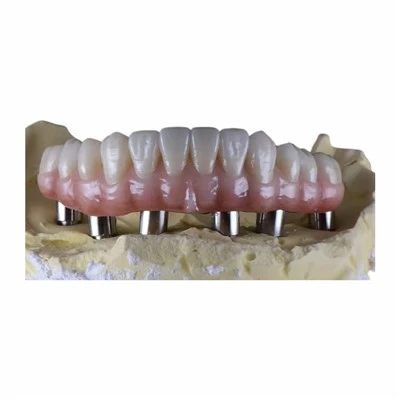
Fixed Prostheses References:
- American Academy of Implant Dentistry. (2022). Dental Implant Therapy for Patients with Reduced Jaw Bone Volume. Journal of Oral Implantology, 48(3), 215-222.
- Misch, C. E. (2018). Dental Implant Prosthetics (3rd ed.). Elsevier.
- International Congress of Oral Implantologists. (2021). Mini Dental Implants: Indications, Techniques, and Outcomes. Implant Dentistry, 30(2), 145-152.
- Rosen, P. S. (2020). Zygomatic Implants: A Comprehensive Review of 15 Years of Clinical Practice. Journal of Craniofacial Surgery, 31(5), 1289-1293.
- World Health Organization. (2019). Oral Health Status and Outcomes: Global Trends in Tooth Loss and Tooth Replacement. WHO Press.
Shenzhen Tuomei Dental Technology Co., Ltd.
We are one of the most professional dental implants manufacturers and suppliers in China, featured by quality products and low price. Please rest assured to buy discount dental implants made in China here from our factory. Welcome to view our website for more information.
Address: Room 301, Building C Fuhe Industrial Park No.18 Hexiu West Road, Zhancheng Community Fuhai Subdistrict, Bao’an District, Shenzhen, Guangdong, China
E-mail: dentallab.works@gmail.com
WebSite: https://www.sztuomeidentallab.com/
