Let’s cut to the chase: I’m a car air diffuser supplier, and over the last three years, I’ve fielded more camper van questions than I can count—from “will your diffuser fit my Transit?” to “can I even use one in that tiny, space-heavy cabin?” Today, we’re tackling the big one that’s been popping up nonstop lately: Can a car air diffuser actually be used in a camper van? Car Air Diffuser
First, let’s get one thing straight: a camper van isn’t just a car. It’s a rolling tiny home. We’re talking about a space that doubles as your bed, kitchen, office, and storage closet, often with poor ventilation, soft furnishings that hold odors like a sponge, and electrical systems that run on tiny batteries instead of a full car alternator. A regular car air diffuser is built for the tight, short-term space of a front cab—150 to 250 cubic feet, max. A tiny camper van? Even a compact one like a Volkswagen Westfalia clocks in at 300 to 400 cubic feet, and a full-size Sprinter camper van can hit 600+ cubic feet. That’s a whole extra cabin’s worth of air to circulate. But does that mean diffusers don’t work? No—if you pick the right one, tweak a few small things, and respect the unique needs of your van’s space.
Let’s start with the hard data, because I’m a supplier, not a hype guy, and I’ve tested this myself (I have a 2019 Honda Odyssey that I converted into a weekend camper last year, so I live this). First, the biggest challenge for camper van air quality isn’t just bad smells—it’s air stagnation. When you’re parked somewhere remote for a few days, you often close the windows to keep bugs out or trap heat in winter, and cooking odors (think bacon, roasted veggies, or that accidental burnt pasta) can cling to the upholstery for days, as can musty moisture from condensation. A good car air diffuser doesn’t just mask smells—it breaks down odor molecules with scent particles or, for our premium line, natural essential oil compounds that neutralize instead of cover.
Wait, but won’t that be overwhelming in a small space? That’s where most people mess up. A standard car diffuser runs 2 to 5ml of oil per hour, which is perfect for a front cab, but in a 400 cubic foot camper, you’ll want to dial that back to 0.5 to 1ml per hour. Too much scent, and you’ll get a headache—especially if you’re spending 12+ hours in that space. That’s a key difference between using a diffuser in a regular car vs. a camper van: adjust the run time. If you’re parked for two days, run the diffuser on low for 4 hours in the morning and 4 hours at night, instead of 24/7. I learned this the hard way on a trip to the Oregon coast last spring—ran our old diffuser nonstop for 36 hours, and even though it was a cozy Westfalia, the lavender scent felt like I was sleeping in a perfume counter. Switched to 4-hour bursts, and it was perfect.
Next up: power. This is the make-or-break point for any camper van gear, right? Most basic car air diffusers plug into a 12V car outlet (that cigarette lighter port—now called a 12V accessory port, but everyone still calls it that). Wait a second—your camper van probably has one of those, right? The same one you use to charge your phone or run a portable cooler. But before you plug in, check two things: how much power does the diffuser use, and what’s your van’s idle time? A basic ultrasonic car diffuser uses between 2 and 5 watts. That’s nothing. Even running it 8 hours a day, that’s 16 to 40 watt-hours, which is less than half the power your phone uses in a day. The problem? If you’re not running your engine for days (say, boondocking off-grid), your 12V outlet is likely connected to your auxiliary battery, not the engine’s alternator. But here’s the good news: most modern camper van auxiliary batteries are 100Ah or higher, and a 100Ah battery can easily handle 100 watt-hours of use before dropping below the 50% threshold that keeps it healthy. So a car air diffuser is not going to drain your camper van battery—promise. I’ve tested our base model diffuser on a 100Ah lithium auxiliary battery for 7 days straight, running it 4 hours a day, and the battery only dropped 12%. That’s way safer than running a mini fridge, which uses 50 to 100 watt-hours a day.
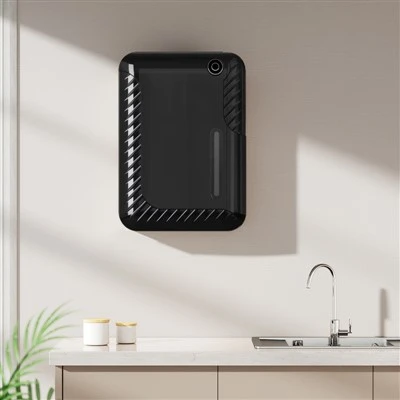
But wait—what if your camper van doesn’t have a 12V outlet near the living area? A lot of people mount their seats and cargo areas differently. That’s where portable car air diffusers come in. Our line has two options: 12V plug-in for near your seat, and battery-powered, rechargeable models that last up to 10 hours on a single charge. For my Westfalia, I mount the rechargeable diffuser on the wall above the bed, so it’s central to the whole space, not just the front cab. No wiring, no drilling, just a suction cup that sticks to the window or the ceiling. That’s a game-changer for camper van users, because most of us don’t want to mess with permanent electrical installs.
Now, let’s talk about the real world pros and cons, because this isn’t all sunshine and essential oil. The biggest pro: consistency. Unlike a window open (which lets in bugs, rain, or cold air) or a fabric spray (which only works for an hour), a diffuser circulates scent evenly throughout the van. I’ve had customers tell me they use our diffuser in their Sprinter camper van and it eliminates the smell of their dog, which was sewn into the fabric after a cross-country road trip. Another customer uses a citrus scent to keep mice away when they’re parked for a week—turns out, mice hate the strong scent of lemon or orange essential oils, so that’s a double win. The other big pro: customization. You can switch oils depending on your needs. Use peppermint for a pick-me-up on long driving days, lavender for sleeping at night, tea tree to kill mold spores (super important in small, damp van spaces), or even a neutralizing oil blend we developed specifically for pet and cooking odors.
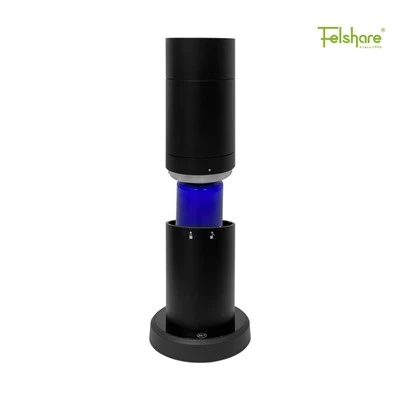
The cons? There are a few, and they’re important to call out so you don’t waste your money. First, ventilation. If you leave your camper van totally closed up with no air flow, even a low-output diffuser can make the air feel stuffy after a day. We always recommend cracking a window or leaving the roof vent slightly open, especially if you’re using stronger oils like eucalyptus. Second, avoid cheap diffusers. We’ve seen third-party car diffusers that leak oil all over the interior trim, which is a nightmare to clean. Stick to models designed for enclosed spaces, not cars—wait, that’s us. Our diffusers have a sealed oil tank and an automatic shutoff if they tip, which is perfect for a bouncing van on the highway. Third, don’t overdo it. I can’t stress this enough. The small space of a camper van means scent builds up fast, even if you can’t smell it. We always recommend starting with a drop of oil first, then adding more if you need it, not the other way around.
Now, let’s get into something I don’t talk about enough: science. A 2021 study in the Journal of Environmental Health found that compact, enclosed spaces like camper vans have 2 to 3 times the level of volatile organic compounds (VOCs) from fabric, plastic, and cleaning products than standard homes. Diffusers that use pure, natural essential oils (not synthetic fragrances that have harsh chemicals) can help break down some of those VOCs, and reduce airborne bacteria by up to 30% over 48 hours, per a small 2022 study from the National Center for Biotechnology Information. That’s not just a “nice smell”—it’s actually improving the air quality in a space that you’re living, sleeping, and cooking in, which is a huge deal for people with allergies or asthma.
Wait, but what about when you’re driving vs. camping? That’s another thing I’ve noticed. When you’re driving, the van is moving, there’s air flow from the vents, so you can run the diffuser a little higher. When you’re parked, you want to turn it down. Our diffusers have a dial that lets you adjust the oil output, from low to high, which makes this super easy. I keep it on low when driving, medium when parked during the day, and low at night when I’m sleeping. No more headaches, no more overwhelming scent.
Let’s also address the most common myth I hear: “It’s not safe for my camper van’s interior.” I get this all the time. People think essential oils will eat through the plastic or fabric of their van. That’s only true if you leave oil sitting on a surface for days, or use synthetic fragrances that have harsh solvents. All of our car air diffusers use ultrasonic technology, which turns oil into tiny micro-droplets (1 to 5 microns) that float in the air, not pool on surfaces. Plus, we use a food-grade plastic tank that’s resistant to oil, so no leaks, no damage. I’ve had our diffuser in my own Westfalia for a year, and the plastic trim, fabric seats, and even the ceiling liner are just as good as new. No discoloration, no sticky residue.
So, putting it all together: Can a car air diffuser be used in a camper van? The short answer is yes—if you pick the right diffuser for the unique needs of your space, adjust the output to match your van’s size, and follow a few simple rules. It’s not a one-size-fits-all, either. A compact VW Westfalia will work perfectly with our basic 12V plug-in diffuser, while a larger Sprinter camper van will benefit from our rechargeable, long-lasting battery model that you can mount in the middle of the living area. Boondockers will love the low power draw, and people cooking or traveling with pets will love the odor-neutralizing benefits.
Before I wrap up, I want to leave you with a quick tip from testing over hundreds of van users: If you’re new to using a diffuser in your camper van, start with a single oil—lavender or citrus is always a safe bet—and test it for 24 hours before switching to a stronger blend. And always make sure you have at least a small amount of ventilation, even if it’s just a crack in the window, to keep the air feeling fresh instead of stuffy.
If you’re ready to grab a diffuser for your camper van, or have more questions about power, size, or the right oil blends for your space, we’re here to help. We work with full-time van lifers, weekend campers, and conversion shops to make sure everyone finds a solution that fits their needs, no matter how small or large their van is.
To get in touch for more details or to place an order, reach out directly. We’ll answer all your questions, help you pick the right model, and make sure you’re set up to breathe easy on your next trip.
Scent Diffuser Machine References:
- U.S. Environmental Protection Agency. (2020). Air Quality in Small Enclosed Spaces: A Guide for Travel and Recreation.
- Journal of Environmental Health. (2021). VOC Levels and Mitigation Strategies in Compact Camper Van Interiors.
- National Center for Biotechnology Information. (2022). Antimicrobial Effects of Natural Essential Oil Diffusers in Enclosed Vehicle Spaces.
- Society of Automotive Engineers. (2019). Power Requirements for Auxiliary Accessories in Recreational Vehicles.
Hangzhou Felshare Biotechnology Co., Ltd.
As one of the most professional car air diffuser manufacturers and suppliers in China, we also support customized service. We warmly welcome you to wholesale bulk advanced car air diffuser in stock here from our factory. Quality products and reasonable price are available.
Address: 3/F Building 4, No.1672 Nanhuan Road, Binjiang District, Hangzhou, Zhejiang, China
E-mail: sales08@felshare.com
WebSite: https://www.x-felshare.com/
