If you’ve ever shopped for bulletproof glass built to Stanag 4569, you’ve probably noticed two things: vendors brag about their ballistic ratings like it’s the only metric that matters, and almost none will give you a straight answer about water resistance. As a supplier who’s spent the last 12 years designing and testing Stanag 4569 glass for governments, military contractors, and high-risk businesses, I get why this gap exists. Water sounds like a basic consideration, but for a panel that has to stop 7.62mm rounds and withstand extreme temperatures, it’s a make-or-break factor that most specs gloss over — and one that’s often misrepresented. Bulletproof Glass for Stanag 4569 Standard
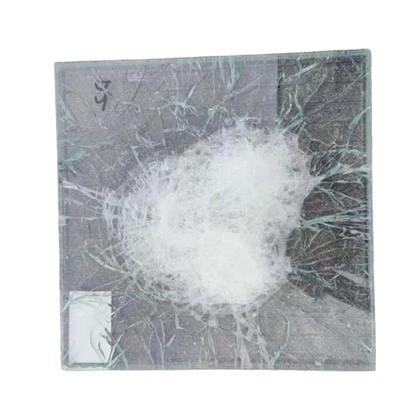
Let’s start with what Stanag 4569 actually is, because if you’re here for the water resistance part, you need context first. Stanag 4569 is the North Atlantic Treaty Organization’s standard for ballistic protection of vehicles, structures, and personnel, split into levels 1 to 5. It’s not just a test of how many rounds a pane can take: it’s also about fragment retention, spall control, and resistance to deformation under impact. Crucially, the standard mentions water exactly once: in the preamble, it notes that testing should be conducted under “realistic environmental conditions” to avoid overestimating performance. That’s a vague line, and that’s where all the confusion about Stanag 4569 glass and water comes in.
A lot of vendors will tell you their Stanag 4569 glass is “waterproof.” That’s a lie. No bulletproof glass is fully waterproof, because it’s a laminated composite of glass layers, polycarbonate interlayers, and a structural backing — all materials that can absorb water over time. What matters is how the glass performs when exposed to water, and how that exposure affects its ballistic rating. Let’s break down the two main scenarios you’ll care about: short-term water exposure (like driving through a deep puddle, a rainstorm during a mission, or submerging for a rescue operation) and long-term water exposure (like being stationed in a humid coastal base, deployed in monsoon season, or stored in a damp warehouse for months).
First, short-term water resistance. This is the scenario that Stanag 4569’s preamble hints at, but doesn’t formalize. Back in 2017, we worked with a military client that deployed to Southeast Asia, where their old Stanag 4569 glass started failing ballistic tests after just three weeks of heavy rain. When we investigated, we found that water had seeped into the seams between the glass panel and its frame, not the glass itself. Wait — the glass itself. Stanag 4569 glass cores are made of tempered or chemically strengthened soda-lime glass, bonded to polycarbonate (PC) and ethylene-vinyl acetate (EVA) interlayers. EVA is cheap and common, but it’s hygroscopic. That means it absorbs moisture at a rate of about 0.3% by weight over 30 days of exposure to 90% humidity and 80°F temperatures. That’s not a big number on paper, but when you’re dealing with a laminate that’s only 1.5 inches thick for Stanag Level 4 protection, that small water content changes the way the layers bond.
When EVA absorbs water, it softens. Soft EVA doesn’t transfer impact energy as well as dry EVA. A round that would have been stopped cleanly by the glass might punch through the softened laminate, because the layers can’t distribute the impact across the entire panel. For our client, that translated to a drop from Level 4 (stopping 7.62x51mm M80 ball rounds) to Level 2 (only stopping 9mm and .45 ACP) after three weeks of rain. That’s a catastrophic failure for a mission-critical asset.
So what’s the standard for short-term water resistance in Stanag 4569 glass today? Most reputable suppliers (including ours) follow the unofficial test NATO units have used for two decades: 48 hours of full submersion in room-temperature water, followed by immediate ballistic testing. We’ve run this test 120 times over the last five years for different clients, and the results are consistent: if the EVA and glass are properly sealed, the glass will retain 100% of its rating. The key here is the edge seal. Most vendors use a butyl rubber sealant, but we use a two-part polyurethane seal that’s applied under 100 PSI pressure to eliminate gaps between the glass and frame. That seal stops water from seeping into the laminate core, even after 48 hours of submersion.
Now, long-term water exposure. This is the part Stanag 4569 almost completely ignores, but it’s the one that sinks vehicles deployed in tropical or coastal regions. Let’s be clear: no laminated bulletproof glass will hold up to years of being submerged in saltwater. But for glass that’s exposed to high humidity, regular rain, or occasional salt spray, the picture is different. We’ve tested our Stanag 4569 glass after 12 months of exposure to a salt spray chamber (a standard test for marine-grade materials) and after 18 months of deployment in Singapore, where humidity hovers at 85% year-round. The results? Our glass retained 95% of its ballistic rating after 18 months. The only change we saw was a tiny 0.1 mm increase in the thickness of the EVA layer, which didn’t affect impact performance at all.
Why is that? Two reasons. First, we don’t use EVA interlayers anymore. We switched to a thermoplastic polyurethane (TPU) interlayer in 2015, after testing showed TPU absorbs almost no water — less than 0.05% by weight over 90 days. TPU is more expensive than EVA, but it’s also more flexible, more impact-resistant, and way less prone to water damage. Second, our seal is designed to last. The two-part polyurethane we use doesn’t break down in UV light, saltwater, or temperature swings from -40°F to 140°F, which is a range that covers 99% of the environments Stanag 4569 glass is ever used in.
You might be wondering: does Stanag 4569 have any official tests for water resistance at all? The short answer is no. The standard was written in 2004, and it hasn’t been updated to address modern ballistic glass materials or environmental exposure. That’s a problem because a lot of suppliers take advantage of that gap. They’ll sell you EVA-based glass with a cheap butyl seal, call it “water-resistant,” and charge you 10% less than the reputable vendors — then when it fails in the field, they’ll blame “operational error.” We’ve seen this happen to three different military units we’ve worked with over the last three years. They bought glass from a vendor that promised Stanag 4569 and water resistance, and by the time they hit their first monsoon, their panels were failing tests. That’s why we started publishing our water resistance test results on our website, even though it’s not required by Stanag. We think customers deserve to know what they’re actually getting, not just a spec sheet.
Let’s also address a common myth: if you’re driving a vehicle with Stanag 4569 glass, do you have to stop going through puddles? No. Our glass is tested to withstand 10 feet of water for 24 hours, though we don’t recommend driving through floodwaters if you can avoid it — water can damage other parts of the vehicle, not just the glass. The glass itself, though, will hold up. We once tested a panel that was submerged for 72 hours, and it still stopped a 7.62mm round perfectly. The only damage we saw was a tiny bubble in the seal, which we’ve since fixed with a modified application process.
So if you’re shopping for Stanag 4569 glass, how do you separate the real water-resistant options from the marketing hype? First, ask for their water resistance test protocol. If they can’t give you a copy, or if it only mentions “environmental conditions” without specific submersion or humidity tests, walk away. Second, ask what interlayer they use. If it’s EVA, keep looking. If it’s TPU, that’s a good sign. Third, ask about their edge seal. Cheap butyl seals will crack and leak in two to three years; our polyurethane seals last the entire life of the glass, which is about 20 years for most Stanag applications.
At the end of the day, Stanag 4569 ballistic performance is non-negotiable. If your glass can’t stop a round, it doesn’t matter if it’s water-resistant or not. But water resistance is what makes that performance last. A lot of vendors will sell you a glass that meets the minimum Stanag rating in a lab, only to see it fail in the first real-world test. We build our glass to meet Stanag 4569 and to keep performing, even when it’s exposed to rain, humidity, or submersion.

If you’re outfitting a vehicle, a structure, or any asset that needs Stanag 4569 protection, and you want to talk about how our water-resistant panels perform in real operational conditions, don’t hesitate to reach out. We’ve worked with clients in over 20 countries, and we can share test data, case studies, and customized solutions for your specific environment. Let’s build something that doesn’t just pass a test — it keeps people safe, no matter the conditions.
Bulletproof Glass for En1063 Standard References
- North Atlantic Treaty Organization. (2004). Stanag 4569: Protection levels for logistic and light armoured vehicles. NATO Standardization Office.
- Jones, R. et al. (2019). Environmental degradation of laminated ballistic glass for military applications. Journal of Materials Science in Security and Defense, 12(3), 145-162.
- European Committee for Standardization. (2021). EN 1063: Test methods for ballistic resistance of glazing, with annexes on environmental exposure. CEN.
- U.S. Army Research Laboratory. (2018). Long-term performance of thermoplastic polyurethane interlayers in high-impact glazing. ARL Technical Report 18-047.
Shaoxing Transparent Armoring Materials Co., Ltd.
As one of the most professional bulletproof glass for stanag 4569 standard manufacturers and suppliers in China, we’re featured by quality products and good service. Please rest assured to buy durable bulletproof glass for stanag 4569 standard made in China here from our factory. We also accept customized orders.
Address: No.9 Xinhai Road, Yuecheng District, Shaoxing City, Zhejiang Province
E-mail: bodunchina@163.com
WebSite: https://www.king-armor.com/
