Hey there, if you’ve ever sourced materials for architecture, landscaping, industrial filtration, or even that DIY fence project you’ve been brainstorming, you’ve probably stumbled on hexagon perforated metal. It’s everywhere right now—from restaurant counter partitions to warehouse air ventilation grilles. But here’s the thing: one question hits my inbox almost every single day from buyers, architects, and even other suppliers: “How much does hex perforated metal weigh per square meter?” Hexagon Perforated Metal
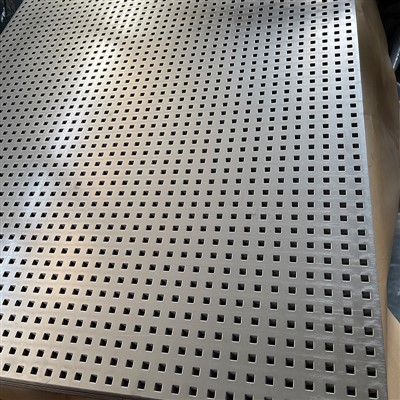
As someone who’s been working as a hexagon perforated metal supplier for over a decade, I get why this matters. If you’re a contractor, you need to factor weight into shipping costs, structural load calculations, and whether your project’s frame can support it. If you’re a fabricator, underordering or overestimating weight can kill your profit margin. It’s not just a random number—it’s a core detail that makes or busts a project. Let’s break this down like I explain it to my team when we’re walking through a custom order: no jargon, just straight facts.
First, let’s nail down what we’re actually talking about. Hexagon perforated metal isn’t just a flat sheet with hex holes—there are variables that completely shift the weight. I can’t just say “12 kg per m²” because that’s useless without context. Let’s start with the basics: the weight boils down to four key factors, and I always highlight these to anyone who hits me with that weight question.
- The base metal thickness (that’s the solid part before any holes are punched)
- The hex hole size (like, a 10mm hex vs. a 25mm hex makes a huge difference)
- The center-to-center spacing between holes (called “pitch” in our lingo—so how far apart each hex is from the next)
- The type of metal (steel, aluminum, stainless steel, even copper for fancy custom jobs)
Let’s use examples to make this real. A super common order we ship is mild steel hex perforated metal used for warehouse safety grilles. The standard spec here is 1.5mm thick base metal, 16mm hex holes, 24mm pitch. What’s the weight for that? Around 12.2 kg per m². That’s a number I can recite in my sleep, but let’s test another common one: aluminum, which is lighter than steel. Same exact hole size, same thickness? That drops it to around 4.4 kg per m². Stainless steel is denser than mild steel, so that same spec would clock in at roughly 12.9 kg per m².
Wait, why does the spacing matter so much? If you have hex holes that are 25mm wide and spaced 30mm apart, you’re leaving more solid metal between holes, right? That means more material, heavier weight. If you cram those same 25mm hex holes to 28mm pitch, you’ve got less solid metal, so weight drops. Same with hole size: a tiny 8mm hex punch means you’re removing less material from the sheet, so it’s heavier than a big 30mm hex that leaves way less solid metal.
I know some of you are math people, so here’s the quick formula we use in our shop to calculate weight for any hex perforated metal (no fancy software needed). First, find the weight of the solid base metal per m²: multiply its thickness (in mm) by the metal’s density. For mild steel, that’s 7.85 kg per mm per m²; aluminum is 2.7 kg; stainless is 7.93 kg. Then, subtract the weight of the material that’s punched out to make the hex holes. For hex holes, the area of one hole is roughly 0.866 times the square of its side length (wait, don’t panic—our team already pre-calculates that for standard sizes). The number of holes per m² depends on pitch: if pitch is P, you get (1,000 / P)² holes per m (since 1m = 1000mm, so divide by pitch to get number of holes per meter, squared for square meters). So it’s solid metal weight minus (number of holes × area of one hole × metal density). That’s how we get those numbers I gave earlier.
But here’s the thing: most people don’t need to do that math. We keep a cheat sheet for every common spec, but we also know that custom orders come in all the time. Last month, we had a landscape architect order 2mm thick aluminum hex perforated metal with 20mm holes and 26mm pitch for a garden screen. We calculated the weight there at around 5.1 kg per m², and that worked perfectly for their light structural needs. Another client, a machinery manufacturer, needed 3mm thick mild steel with 12mm hex holes for a machine guard—weight there was 22.3 kg per m², which is heavy enough to withstand impact from parts bouncing off.
Now, let’s clear up a common mistake I see buyers make all the time: they mix up “open area” with weight. Open area is how much of the sheet is holes (so more open = lighter), but weight is based on the solid material that’s left. For example, a sheet with 60% open area (more holes) is lighter than a sheet with 40% open area (fewer holes), but that only lines up if the hole size and pitch are the same. If you have a huge 30mm hex with 50% open area vs. a tiny 10mm hex with 55% open area, the tiny holes will leave more solid metal, so it’s heavier even though it has a higher open area. That’s a trick question I love to catch new buyers on.
Another thing: don’t forget the sheet size itself. When we talk per square meter, that’s the total area of the sheet, not the usable area. So if you order a 2m × 1m sheet (2 m² total), the weight for that sheet is just the per m² number times 2. Easy, but it’s a detail that skips a lot of people when they’re quoting shipping.
As a supplier, I’ll be honest: we don’t just spit out a weight number and walk away. We ask questions to make sure we give you the right one. A lot of new buyers will say “just give me the standard hex perforated metal weight” and that’s great, but standard isn’t one-size-fits-all. For someone making a decorative wall panel, 1mm aluminum with 18mm hex holes is 3.2 kg per m²—light enough to mount on drywall, no problem. For a truck bed liner guard, 4mm mild steel with 16mm hex holes is 31.4 kg per m²—heavy enough to take abuse.
I’ve had clients come to us after ordering from another supplier who gave them a wrong weight. Once, a small construction company ordered 10 sheets for a sidewalk barrier, expecting 12 kg per m², but the supplier sent 15kg sheets because they didn’t specify the base metal thickness. That threw their entire load calculation off, and they had to reinforce their frame last minute—cost them extra time and money. That’s why accurate weight isn’t just a number, it’s a peace of mind for anyone working on a project.
If you’re wondering what the most common hex perforated metal weight is across all industries? It’s around 10-14 kg per m² for mild steel, 3.5-5 kg per m² for aluminum, for specs that are the go-to for ventilation, partitions, and general structural use. But again, that’s just a range—always confirm your exact specs if you need a precise number.
Now, let’s talk about why we’re the hexagon perforated metal supplier you can trust with this. We don’t cut corners on material, so our weight numbers are exact—no underreporting to make the price look lower, no overreporting to pad our profit. We have 100+ standard stock specs, and we can also cut custom sizes, thicknesses, hole sizes, and finishes (powder-coated, galvanized, brushed aluminum) to fit your project.
If you’re in the middle of planning a project, or you’re sick of guessing weight numbers from other suppliers, let’s chat. We can send you a free sample of any hex perforated metal spec, run you an exact weight for your order, and even help you adjust your design if you need a lighter or heavier option without sacrificing performance. Don’t stress about math or guessing—we’ve got the details covered so you can focus on your project.
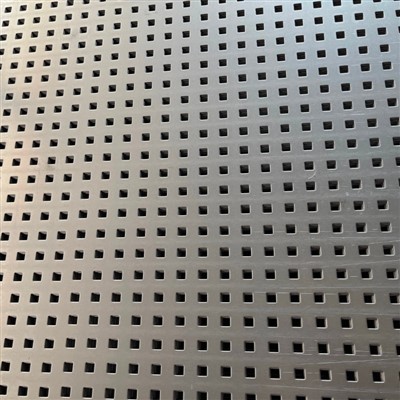
For more info on hex perforated metal specs, weight calculations, or stock availability, feel free to reach out to us to discuss your requirements. We’re here to help you get the right product at the right weight, every time.
Round Hole Perforated Metal References:
- Metal Perforation Handbook, Industrial Perforators Association, 2021
- Material Density Standards for Common Metals, Engineering Toolbox, 2022
- Hexagon Perforated Metal Design Guidelines, US Department of Agriculture Forest Service, 2020
- Perforated Metal Weight Calculation Formulas, Perforated Metals Manufacturers Association, 2021
Anping Yilida Metal Wire Mesh Co., Ltd.
Anping Yilida Metal Wire Mesh Co., Ltd. is one of the most reliable hexagon perforated metal manufacturers and suppliers in China, also supports customized service. Please feel free to buy bulk high quality hexagon perforated metal made in China here from our factory.
Address: Wire Mesh Development Zone, Anping, Hebei Province, China
E-mail: sales@wiremesh-yg.cn
WebSite: https://www.yilidametal.com/
